Regardless of whether you’re an independent courier or you own a fleet, your delivery vans are the backbone of your entire operation.
Fill your fleet with unreliable vans that don’t suit your routes or cargo and you’ll struggle to turn a profit. But pick vans that are tailored to your exact needs and you’ll lay the foundation for a thriving courier business.
But with so many options, which delivery van is the best for your business?
The vans you’ll find below can fit any fleet at any stage, whether you’re just starting or scaling fast. They range from time-tested workhorses like the discontinued Chevrolet Express to cutting-edge EVs like the Mercedes eSprinter.
We’re hoping this selection can help you zero in on the best delivery van for you without too much work.
Best Delivery Vans for Couriers - Quick Snapshot
Van Model | Engine | Fuel Economy (MPG) | Payload (lbs) | Cargo Volume (cu ft) | Used Price Range | Annual Maintenance |
|---|---|---|---|---|---|---|
Ford Transit (2017+) | 3.7L V6 (275 hp, 260 lb-ft) | 14-17 | 3,148-5,394 | 246-487 | $17,000-$45,000 | $676-972 |
Ram ProMaster (2014+) | 3.6L Pentastar V6 (276 hp, 250 lb-ft) | 15-16 | 3,800-5,220 | 304-524 | $9,400-$70,000 | $1,072 |
Mercedes Sprinter (2019+ VS30) | OM654 2.0L Turbodiesel (168-208 hp, 332 lb-ft) | 19-21 | 3,351-6,812 | 319-533 | $22,000-$78,000 | $1,778 |
Chevrolet Express / GMC Savana (Pre-2020) | 4.8L V8 (285 hp) / 6.0L V8 (329 hp) | 11-14 | 3,280-4,280 | 239-314 | $6,600-$60,000 | $963 |
Best Gas and Diesel Delivery Vans
We’ve spoken to courier fleet owners to prepare a list of the best gas and diesel-powered delivery vans on the market right now.
We’ve focused on second-hand options, which is where you’ll find the highest ROI at every price range.
Best All-Rounder: Ford Transit
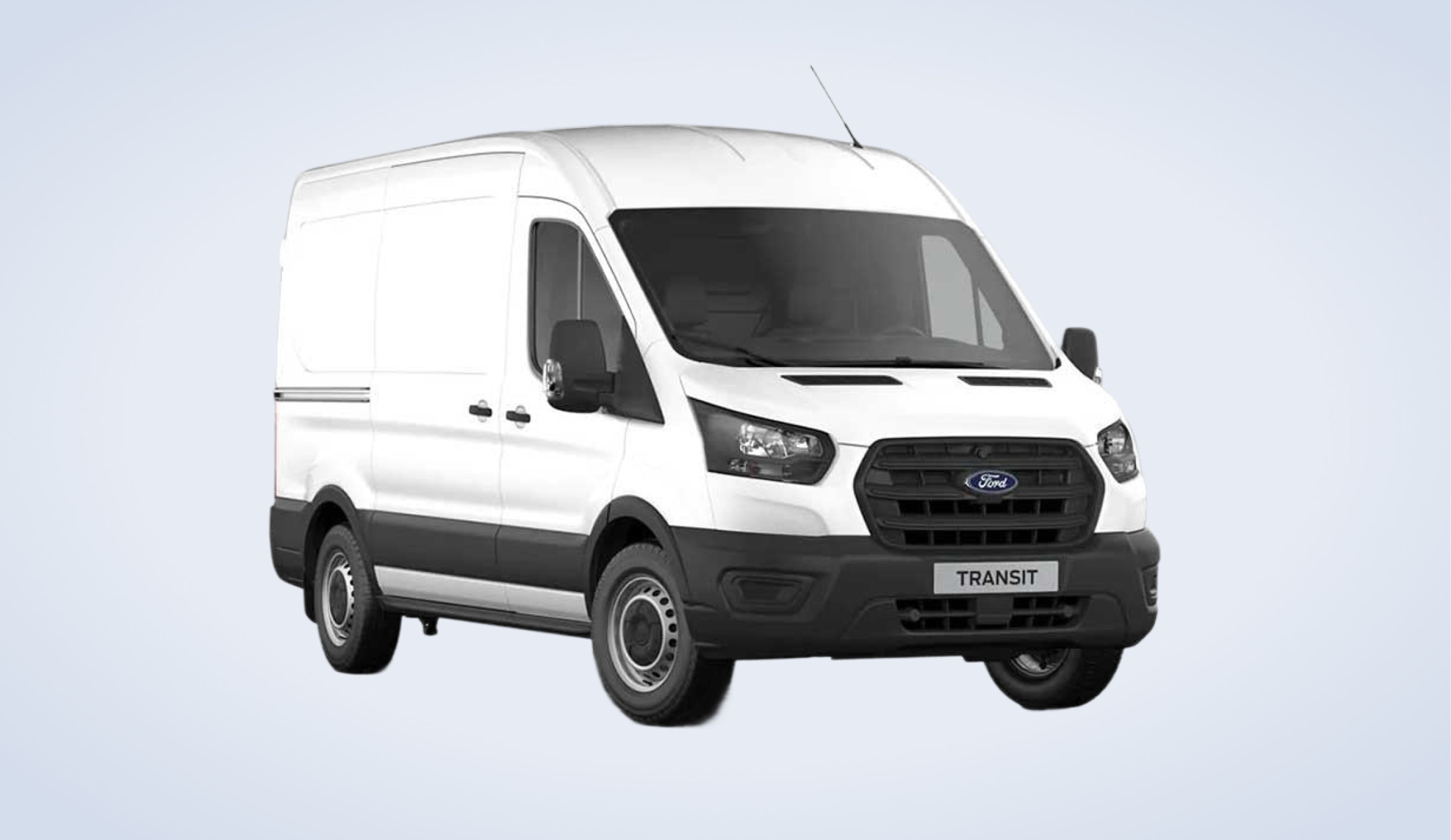
The Ford Transit the go-to choice for fleet managers who need dependable workhorses without breaking the bank. It’s reliable – and when it does break, parts are affordable and widely available. And it retains its resale value, too. However, it isn’t the biggest or most efficient van on the market.
Key specs at a glance:
- Ideal year: 2017+
- Used price range: $17,000-$45,000 Used
- Engine: 3.7L V6 (275 hp, 260 lb-ft)
- Fuel Economy: 14-17 MPG real-world
- Payload: 3,148-5,110 lbs (Transit 150 to 350-HD)
- Cargo Volume: 246-487 cubic feet
- Annual Maintenance: $676-972
Our take on the Ford Transit
The Ford Transit has become the backbone of American delivery fleets for good reason. It’s a reliable workhorse. And when it does break down, you’re never far from help, since there are over 650 specialized commercial Ford dealers in the US.
The Transit isn’t the cheapest option on the market. Used prices start from around $17,000 for 2017 models and rise to up to $45,000 for recent 2024 units. But the Transit retains its resale value well – so you’ll pay more upfront, but you’ll also get more back when it’s time to upgrade.
It’s also easy to find in three platform variations on the second hand market:
- Transit 150 (3,148 lbs payload)
- Transit 250 (4,550 lbs payload)
- Transit 350-HD (5,110 lbs payload)
Fleet data from over 4 million tracked real-world miles shows the Transit averages 14-17 MPG – roughly the same as other gas-engined vans on the market. And it has some of the lowest annual maintenance costs going at just $676-972 (depending on the model).
The bottom line
There’s a reason the Ford Transit is one of the most popular delivery vans around the world. You really can’t go wrong with this all-round workhorse.
Best Urban Maneuverability: Ram ProMaster
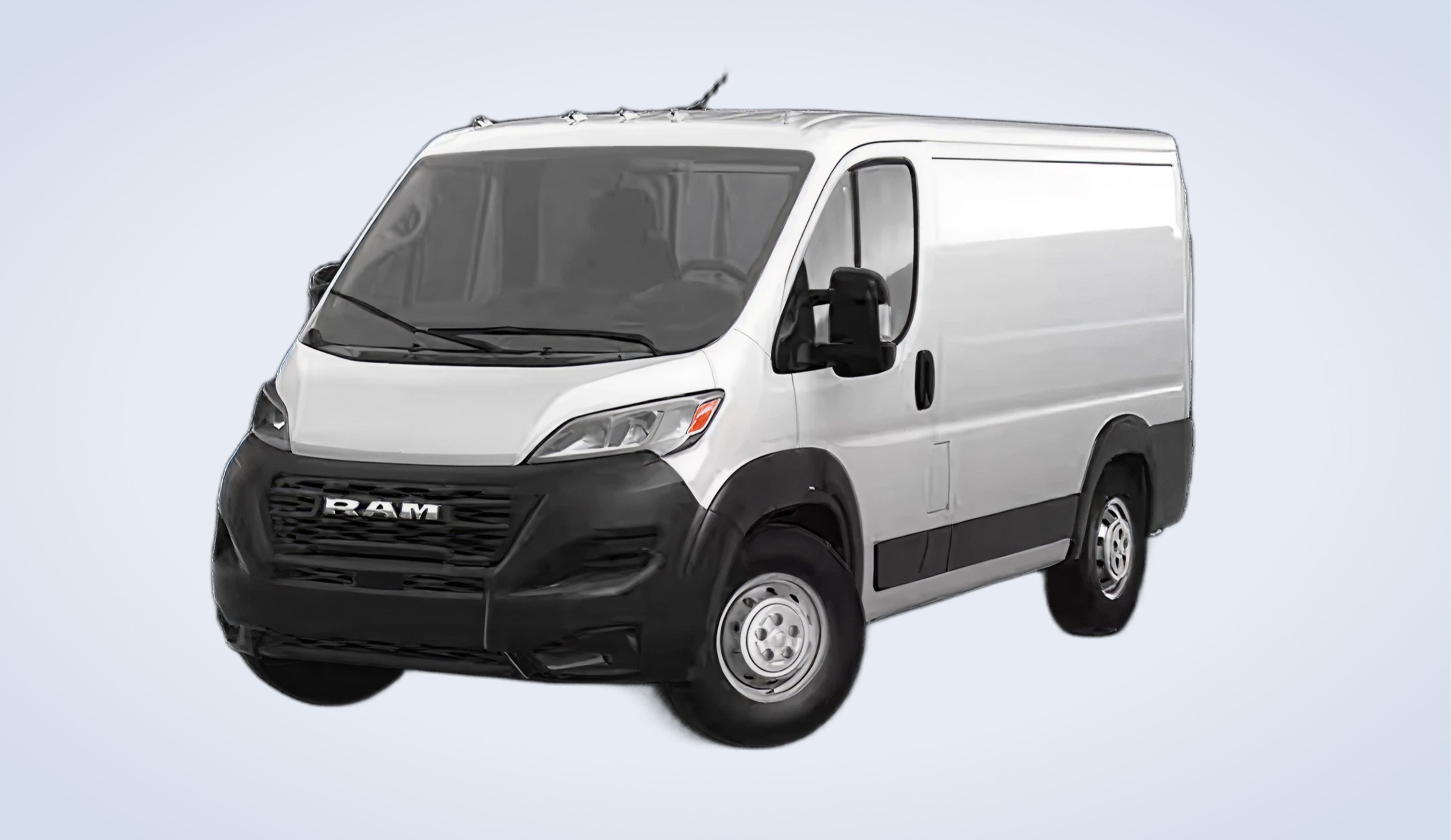
There’s a lot to like about the Ram ProMaster. It’s affordable, you can fit a lot in it (up to 524 cubic feet in the Super High Roof Extended model), and its 36-foot turning radius is tighter than a Toyota Camry. But it’s far from the most reliable van on the market. And it doesn’t retain much resale value, either.
Key specs at a glance:
- Ideal year: 2014+
- Used Price Range: $9,400-$70,000
- Engine: 3.6L Pentastar V6 (276 hp, 250 lb-ft)
- Fuel Economy: 15-16 MPG real-world
- Payload: 3,800-5,220 lbs (ProMaster 1500 to 3500)
- Cargo Volume: 304-524 cubic feet
- Annual Maintenance: $1,072
Our take on the Ram ProMaster
The Ram ProMaster does one thing really well: fit more stuff in less space. With cargo space ranging from 304 cubic feet (low roof) up to 524 cubic feet in the extended Super High Roof configuration, the ProMaster squeezes every possible inch out of its footprint.
The ProMaster’s standout feature is its incredibly low load floor, which is just 21 inches high (8 inches lower than most competitors). This allows your drivers to load the ProMaster easier and faster – and their backs will thank you for it.
Its 36-foot turning radius also makes it a great choice for last-mile deliveries, where maneuverability really matters.
However, the Ram ProMaster does come with two big downsides. The first is its 2/5 RepairPal reliability rating. Common issues include excessive headlight bulb failures, sliding door mechanism problems, and cam position sensor failures – mechanical failures that can put a van out of commission for days.
The bottom line
Looking for a huge cargo space without the huge price tag? The ProMaster is a solid bet, especially for last-mile operations in congested cities. Just be sure to put every ProMaster you’re thinking of buying through a thorough inspection before you splash up the cash to make sure you don’t end up with a lemon.
The Premium Pick: Mercedes-Benz Sprinter
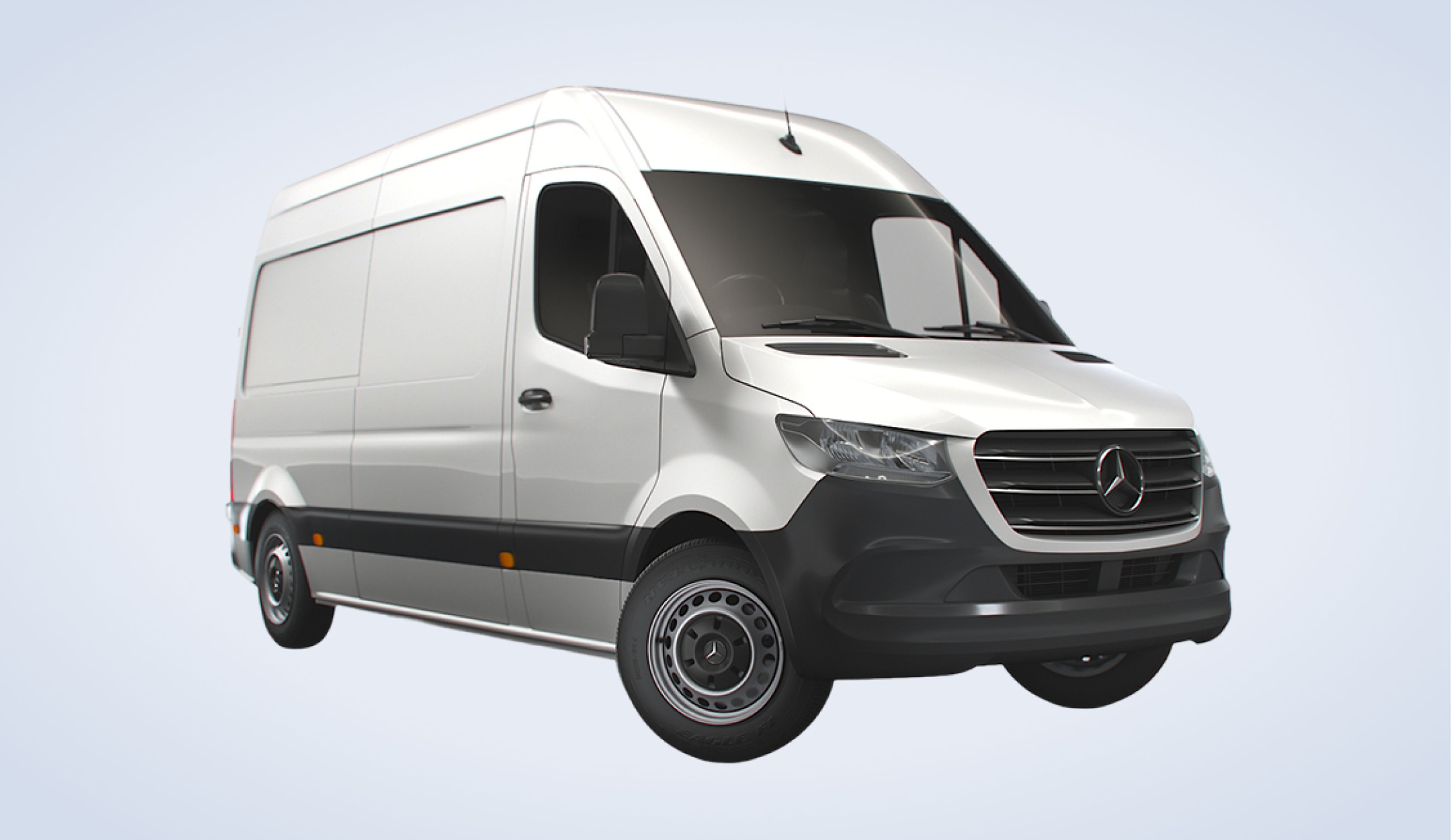
The Mercedes-Benz Sprinter costs plenty upfront and can be pricey to maintain, thanks to the premium you’ll pay for Mercedes-specific components. But it’s incredibly reliable, has great fuel economy (17-21 MPG), and a huge cargo capacity (533 cubic feet and 6,812 lbs payload capacity). If you can justify the upfront cost it can often pay for itself in the long-run.
Key specs at a glance:
- Ideal year: 2019+ VS30
- Used Price Range: $22,000-$78,000
- Engine: OM654 2.0L turbodiesel (168-208 hp, up to 332 lb-ft)
- Fuel Economy: 19-21 MPG real-world
- Payload: 3,351-6,812 lbs (Sprinter 1500 to 4500)
- Cargo Volume: 319-533 cubic feet
- Annual Maintenance: $1,778
Our take on the Mercedes-Benz Sprinter
The Mercedes-Benz Sprinter is the most expensive van we’ve shortlisted here – and for good reason.
While competitors typically need major component replacements around 200,000-250,000 miles, properly maintained Sprinters routinely push past 400,000 miles with original engines and transmissions.
The Sprinter’s 17-21 MPG real-world performance also makes it the most fuel-efficient ICE van we’ve featured here. Plus, its large cargo capacity means you can deliver the same amount of parcels in fewer trips.
However, those savings you make on fuel will be eaten into when your Sprinter does need repairs. Spare parts cost a premium, and annual maintenance costs average a massive $1,778 – nearly triple some Ford Transit equivalents. However, the Sprinter’s extended 20,000-mile service intervals do help offset higher per-service costs.
The bottom line
The Sprinter often makes sense for highway-focused operations with high annual mileage (25,000+ miles), where its best-in-class fuel economy and service life really pay off. But urban delivery fleets with lower annual mileage might find better value elsewhere.
”If you go for a Mercedes, don’t cheap out on repairs and aftermarket parts. You’ll defeat the point of paying a premium for the Sprinter’s superior reliability if you go for a cheap aftermarket alternator that breaks down all the time.” - Brad Clements, Falcon Express Transportation

Value Pick: Chevrolet Express / GMC Savana
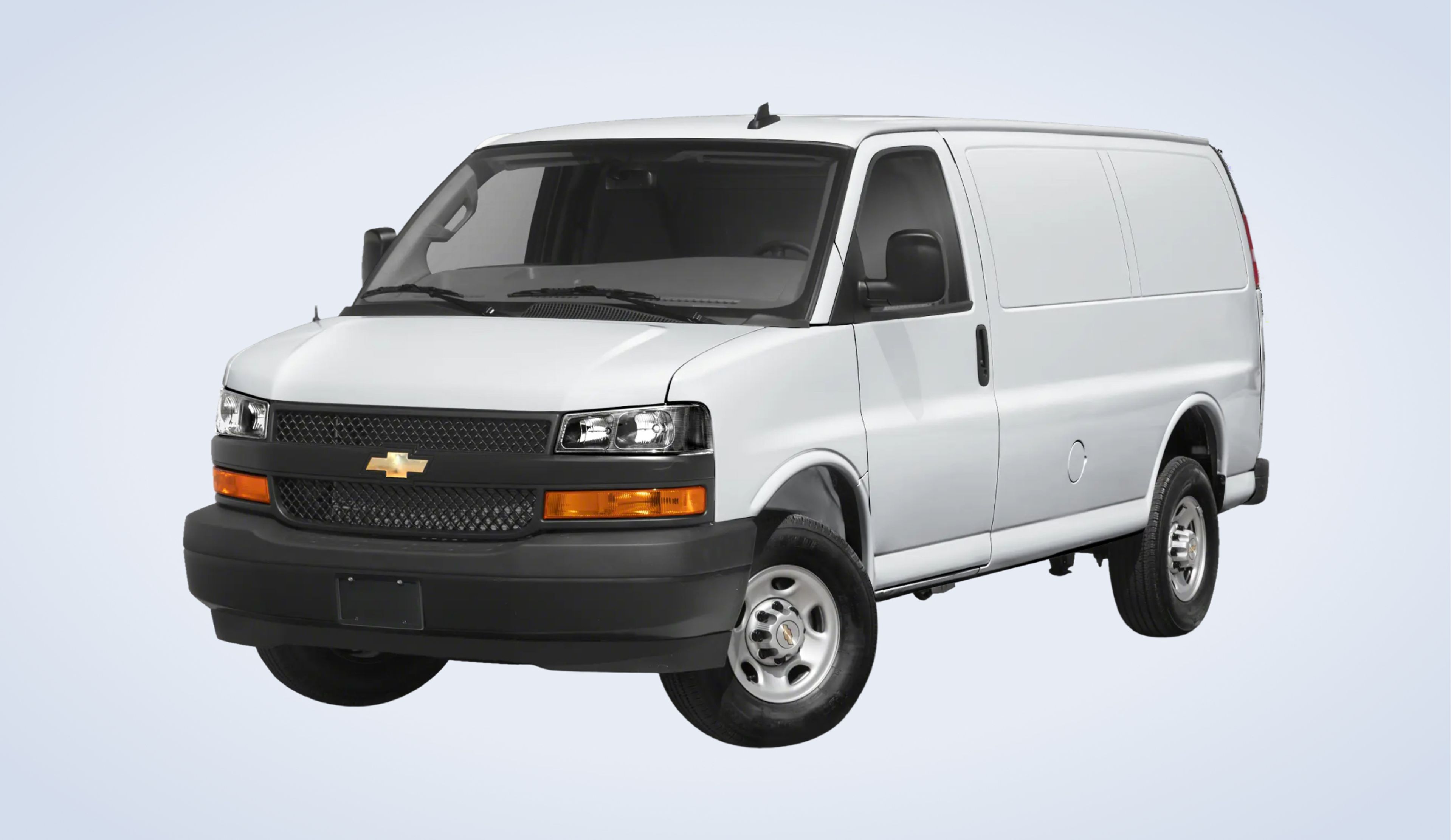
Despite being discontinued, the Chevrolet Express / GMC Savana are still some of the most popular delivery vans in the US thanks to their legendary reliability. These traditional body-on-frame vans may lack modern bells and whistles, but they offer rock-bottom maintenance costs and bulletproof reliability that budget-conscious fleet operators love.
Key specs at a glance:
- Ideal year: Pre-2020
- Used Price Range: $6,600-$60,000
- Engine: 4.8L V8 (285 hp) / 6.0L V8 (329 hp)
- Fuel Economy: 11-14 MPG real-world
- Payload: 3,280-4,280 lbs (2500 to 3500 series)
- Cargo Volume: 239-314 cubic feet
- Annual Maintenance: $963
Our take on the Express/Savana
The Chevrolet Express / GMC Savana are basic, bulletproof, and dead simple to fix. Despite being discontinued, that makes them the perfect pick for fleet operators who care more about keeping costs down than having the latest fleet of vehicles.
They’re cheap to buy, and annual maintenance costs are just $963. Plus, parts are easy to come by, and most garages can service these GM vans.
While they’re cheap to buy and run, the Express/Savana do come with their downsides. First up is the fuel economy, which data from 1.6 million tracked miles shows averages out at 11.8-14.2 MPG. That’s the worst in this shortlist by quite a margin.
Plus, the Express/Savana don’t hold much, either. With just 239-314 cubic feet of storage and a snug 48-inch interior roof height, these vans simply can’t fit as many parcels as the alternatives.
The bottom line
For operators who want the absolute lowest operating costs, proven reliability, and simple maintenance over space efficiency, the Express/Savana still makes tons of sense.
Best Electric Delivery Vans
Electric vans aren’t the right fit for every fleet. Their limited range means they can’t handle routes longer than 80 miles in some cases. Plus, they cost a lot more than their ICE equivalents upfront – and require a costly depot charging infrastructure.
However, they’re incredibly cheap to run and break down a lot less often than ICE vehicles, since they have far fewer moving parts.
Looking to add an EV to your fleet? Here’s our verdict on two internationally available electric vans:
Best Electric All-Rounder: Ford E-Transit
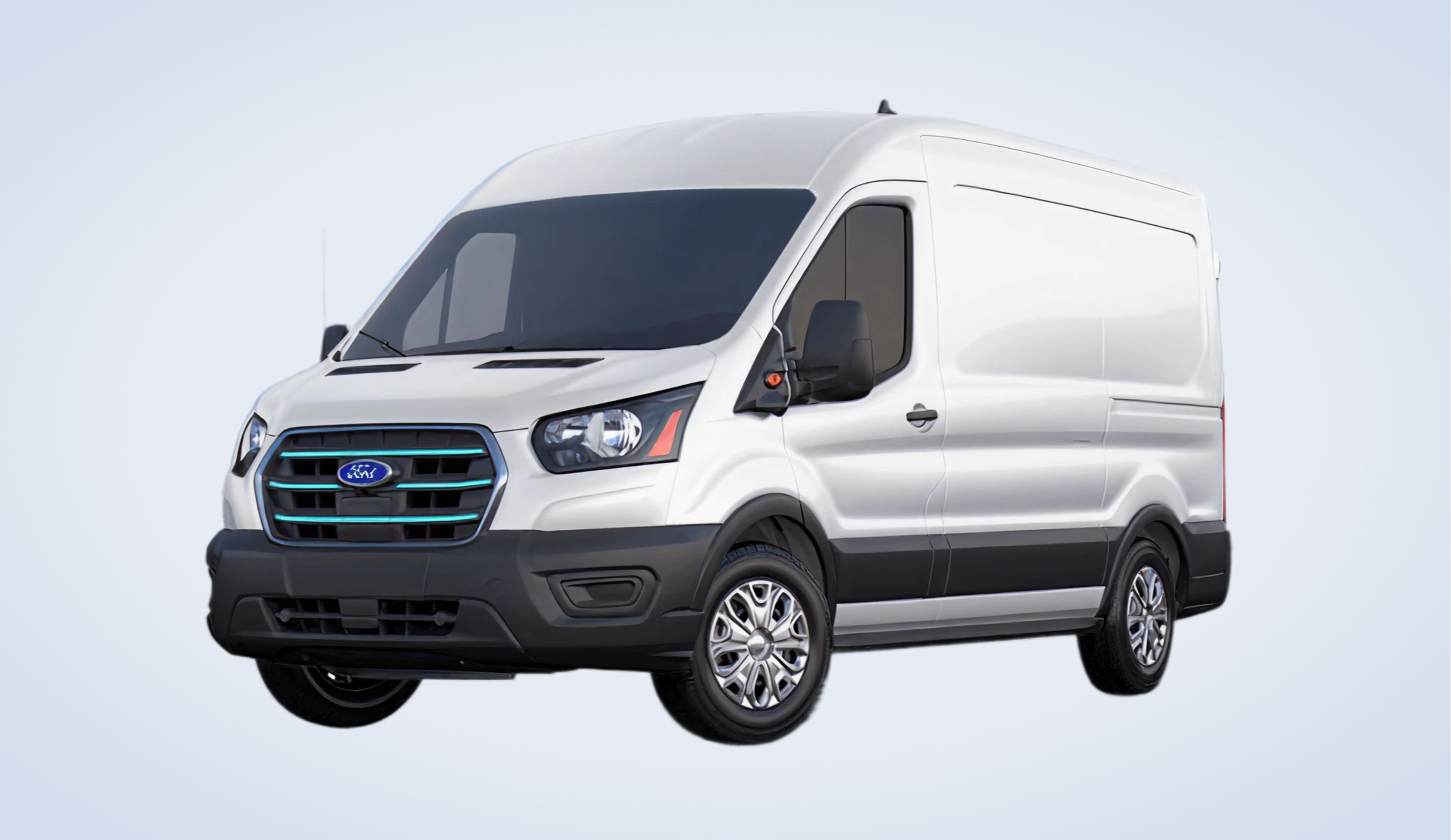
The Ford E-Transit is as versatile as its ICE counterpart, widely available on the second-hand market, and is backed up by an established service network. However, its limited 159-mile EPA range – which drops to 80-85 miles on routes with frequent stops – means it isn’t right for every fleet.
Key specs at a glance:
- Ideal year: 2022+
- Used Price Range: $25,000-$45,000
- Motor: Single electric motor (266 hp, 317 lb-ft)
- Range: 196 miles EPA rating (and a “dependable” range of 100 miles)
- Payload: 3,249-4,290 lbs (E-Transit 150 to 350)
- Cargo Volume: 246-487 cubic feet
Our take on the Ford E-Transit
Ford’s electric version of their tried-and-tested ICE Transit has a lot going for it.
The first is how widely available it is on the second-hand market. Ford’s E-Transit was America’s best-selling electric van in 2023, and now those vans are available for an average of $33,242. That means you can pick them up for half the price of an eSprinter, which are much harder to pick up second-hand.
Combined with Ford’s massive dealer network, the price makes the E-Transit an obvious starting point if you’re dipping your toes into an electric fleet.
However, the E-Transit’s range is nothing to shout about at 80-85 miles on routes with frequent stops. That being said, Ford’s own data shows most commercial vans only do about 74 miles per day on average – well within the E-Transit’s range, even when it’s cold or loaded up. Whether it’s the right van for your fleet depends on how many routes you have within that range.
The bottom line
If you’re looking to add EVs to your fleet without breaking the bank then the E-Transit is probably your best bet. Ford knows commercial vehicles, the pricing makes sense, and the Transit platform has already proven itself over millions of real-world miles.
Best for Long Routes: Mercedes eSprinter
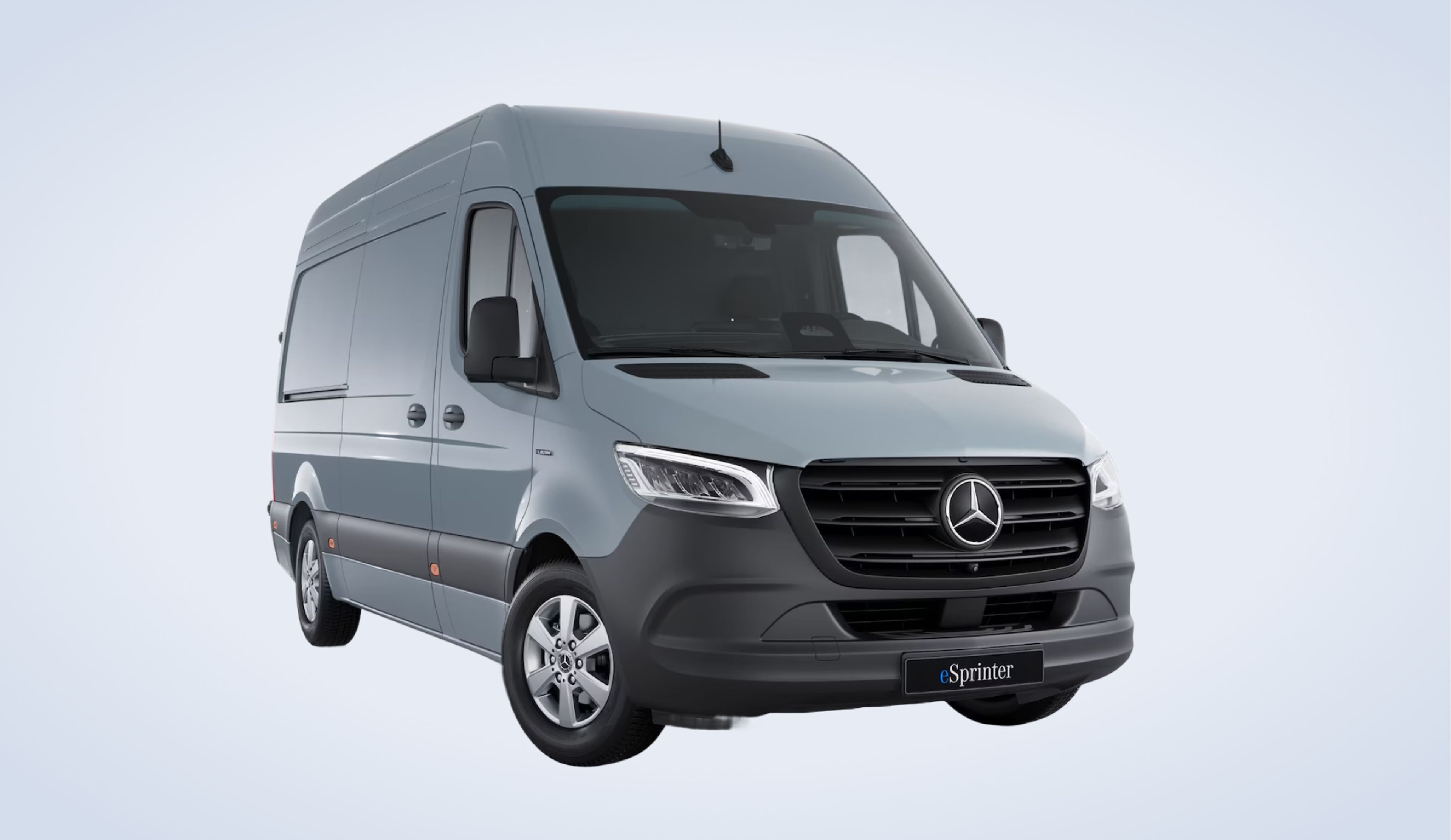
The Mercedes eSprinter can easily hit 200+ miles on a single charge and has a healthy cargo space. That means longer routes and fewer vans needed overall. But good luck finding a used one…
Key specs at a glance:
- Ideal year: 2024+
- Used Price Range: Virtually non-existent
- Motor: Single electric motor (201 hp, 295 lb-ft)
- Range: Up to 272
- Payload: 2,624-3,924 lbs (eSprinter 2500 to 4500)
- Cargo Volume: 319-533 cubic feet
Our take on the Mercedes eSprinter
The Mercedes eSprinter’s big selling point is its range. While you have to carefully plan E-Transit routes around its 120-mile daily limit, eSprinter operators routinely hit 200+ miles without breaking a sweat. Plus, you can also fit plenty on an eSprinter, with the 4500 boasting 533 cubic feet of capacity.
Its longer range and larger capacity make the eSprinter mean it can deliver more parcels on a longer route than the E-Transit. Which means you need fewer vans in your fleet to make the same number of deliveries.
The catch of course is the eSprinters hefty price tag. Second-hand eSprinters are few and far between. And when you find one, you can expect it to go for near the $74,181 sticker price. It’s going to take a few years until there’s a good supply of used eSprinters at a decent price on the market.
The bottom line
If you absolutely need the best electric van capability and don’t mind paying for it, the eSprinter delivers. Just know you’re paying new vehicle prices and dealing with a more limited service network compared to Ford’s massive dealer support.
Key Things to Keep in Mind When Buying a Delivery Van
“A good mechanic is part of your team. So when you find one, do everything you can to become their favorite client. Get them to do all your oil changes and services so they can count on you as a regular paycheck and tip them well when they come out to do an emergency repair on one of your vans. That way, you’ll become their priority when you need them – which will get your vans back on the road as fast as possible.” - Brad Clements, Falcon Express Transportation
- The sweet spot. The goal is to find the sweet spot between between age and affordability. Buying too cheap means constant breakdowns, while overspending on payments eats into your profit margins
- Go for dependable. Losing contracts hurts more than higher loan payments. Customers quickly drop unreliable couriers, so a more dependable van is worth a premium.
- Mileage over age. A well-maintained older van is often a better pick than a newer model that’s been run into the ground.
- Request maintenance records. Consistent service history tells you more about reliability than any sales pitch
- Passenger-side doors. Always make sure your van has one. This might only save seconds per stop, but that adds up when you’re making hundreds of deliveries a day.
“Poorly inflated tires can cost you hundreds of dollars over the course of a year. Regularly inflating your tires will not only boost your MPG, but also make it more likely that you’ll spot if you have a nail in your tire or anything like that. Then you can go and get any punctures you find plugged straight away instead of them becoming a bigger problem.” - Brad Clements, Falcon Express Transportation
- Smaller is better. Select the smallest engine that meets your payload needs. A small improvement in fuel economy can have a big impact on bottom line over thousands of miles
- Cargo door configurations. Think about this carefully. Rear doors that open 270° typically work better than barn doors for urban deliveries
- Additional budget. Make sure you have budget for the complete ownership cycle. Cheaper vans often have more expensive parts and service costs
- Used vehicles. Be cautious with ex-rental or ex-Amazon vehicles. These fleet vehicles are typically subjected to heavy use and require thorough inspection
- Maintenance history. Avoid diesel vans without documented DEF system maintenance. Emissions system repairs can easily cost $3,000.
- Extensively modified vehicles. Aftermarket changes often create reliability issues down the road.
How to Size Your Delivery Van Fleet
Running half-empty vans wastes money on payments and fuel. But loading your fleet up to max capacity every day doesn’t account for inefficient stacking or volume spikes.
So, you should aim to run your vans at around 80% capacity on typical days.
To work out whether a van you’re thinking of adding to your fleet has enough capacity for the routes you want to run it on:
1. Calculate your average volume per route
Check your actual route data in Spoke Dispatch for your typical stops per route and average package size.
For example, if the typical route is 120 stops and your average parcel is 3 cubic feet, your vans are going to need at least 360 cubic feet of capacity.
2. Add a 20% buffer
Then bake in a 20% buffer to account for inefficient stacking and peak days. In our example, that brings our minimum capacity to 432 cubic feet.
That means the Ford Transit standard high-roof (404 cubic feet) would be too small for your needs but the Ford Transit extended (487 cubic feet) would be a great fit.
3. Check weight limits
You then need to account for average package weight.
For example, a route that averages 150 stops with a typical parcel weight of 30 lbs will require a van that can carry at least 5,400 lbs. That means you’d have to plump for the Mercedes-Benz Sprinter 4500 to cover that route – or spread those deliveries out across two smaller vans.
How to Calculate Your Van’s Cost Per Delivery Stop
Your North Star when you’re deciding which van to add to your fleet should be cost per delivery stop.
Cost per Stop = Total Ownership Cost ÷ Total Stops Over Vehicle Life
This number will reveal when a cheaper van will actually cost you more in the long run – or when it’s worth sticking with the more affordable option.
Real example: used Mercedes Sprinter vs. used Chevrolet Express
Let’s see how two vans stack up at first glance:
Despite burning $10,000 more fuel over the five years, the Express offers much better value for money than the Sprinter at first glance.
But let’s say the Sprinter’s rock-solid reliability and larger cargo capacity let you complete 15% more stops every year than you’d make in the Express. That changes things:
- Sprinter: $66,916 ÷ 172,500 stops = $0.39 per stop
- Express: $51,354 ÷ 150,000 stops = $0.34 per stop
Then you have to factor in the resale value. Let’s say the Sprinter retains ~$15,000, since there’s a strong demand for second-hand Mercedes. While the Express retains just $4,000, given the limited demand for high-mileage Chevvys.
That puts our adjusted costs at:
- Sprinter: $51,916 ÷ 172,500 = $0.30 per stop
- Express: $47,354 ÷ 150,000 = $0.32 per stop
So, looking at the full picture, the Sprinter is actually the more cost-effective choice over the entire five years.
Of course, there are a lot of ifs, but, and maybes here. Could you actually make efficient use of the Sprinters’ larger capacity on your current routes? Is there a well-stocked Mercedes garage near you, or will your Sprinter be out of action for days at a time whenever it needs a spare part?
Make sure to run the numbers on all these variables before you reach for the company credit card to make sure you’re getting the best bang for your buck every time you add a van to your fleet.
A Better Van Isn’t the Only Way to Boost Margins
A fleet of reliable vans tailored to your routes and cargo is the foundation of any successful courier business.
But the most successful operations don’t stop there.
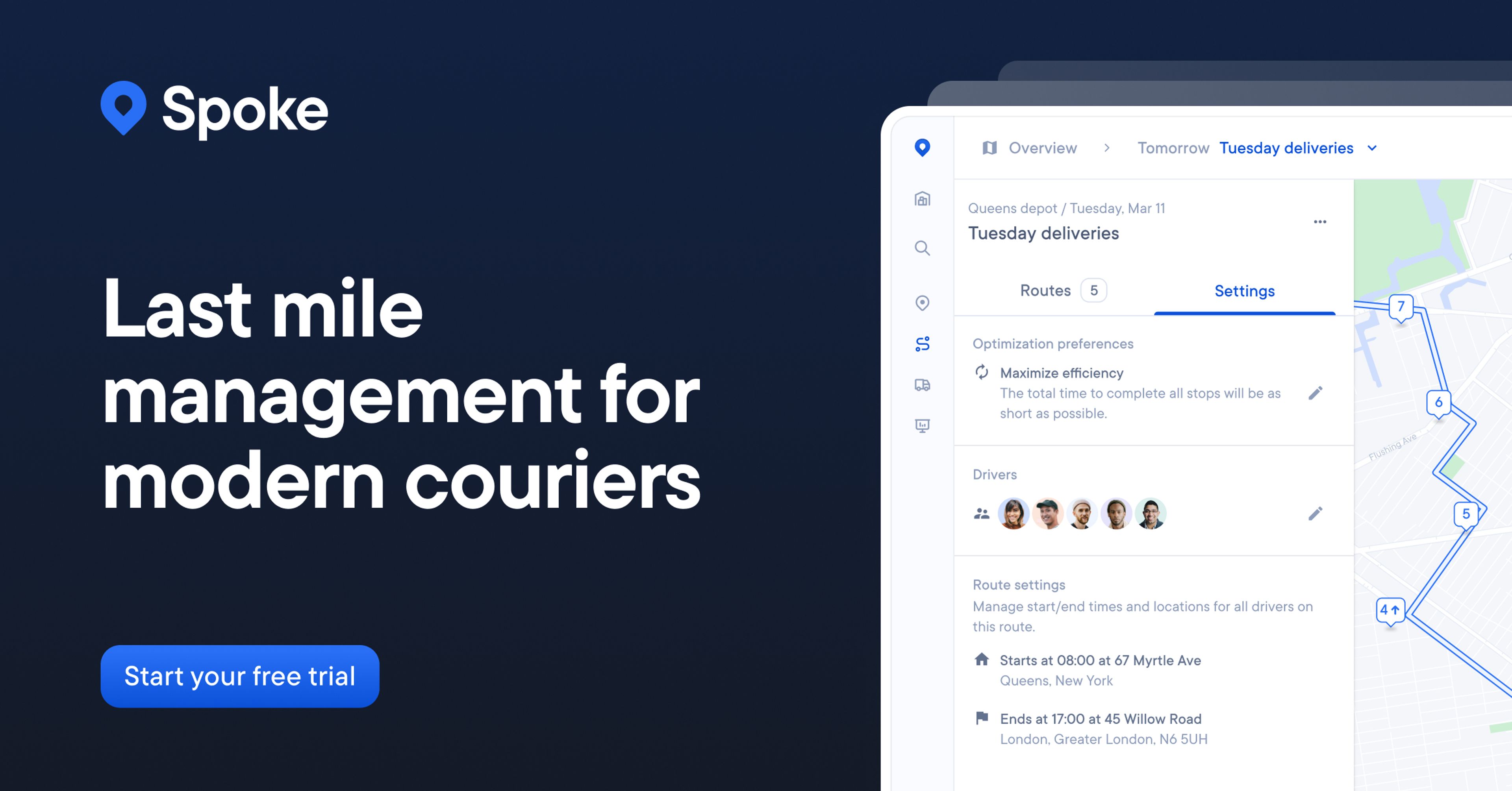
Spoke Dispatch is Last Mile Management software built specifically for courier companies, and thousands of delivery teams are saving over 25% per month.
Core features:
Here’s the core features:
- Upload hundreds of delivery stops in minutes via API, spreadsheet upload or Spoke Connect
- Advanced route optimization that creates the fastest routes at the click of a button
- Live driver tracking via dispatcher dashboard
- The easiest to use and most reliable driver app on the market
- Flexible proof of delivery through signature, multiple photos and safe place notes
- Dynamic delivery notifications via SMS and email to keep your recipients in the loop (add your client’s branding or your own)
- Delivery zones that you can draw out on a GPS map
- Vehicle capacity for compliance and load management
- Barcode scanning so drivers can scan address labels and create routes quickly within the app
- And so much more...