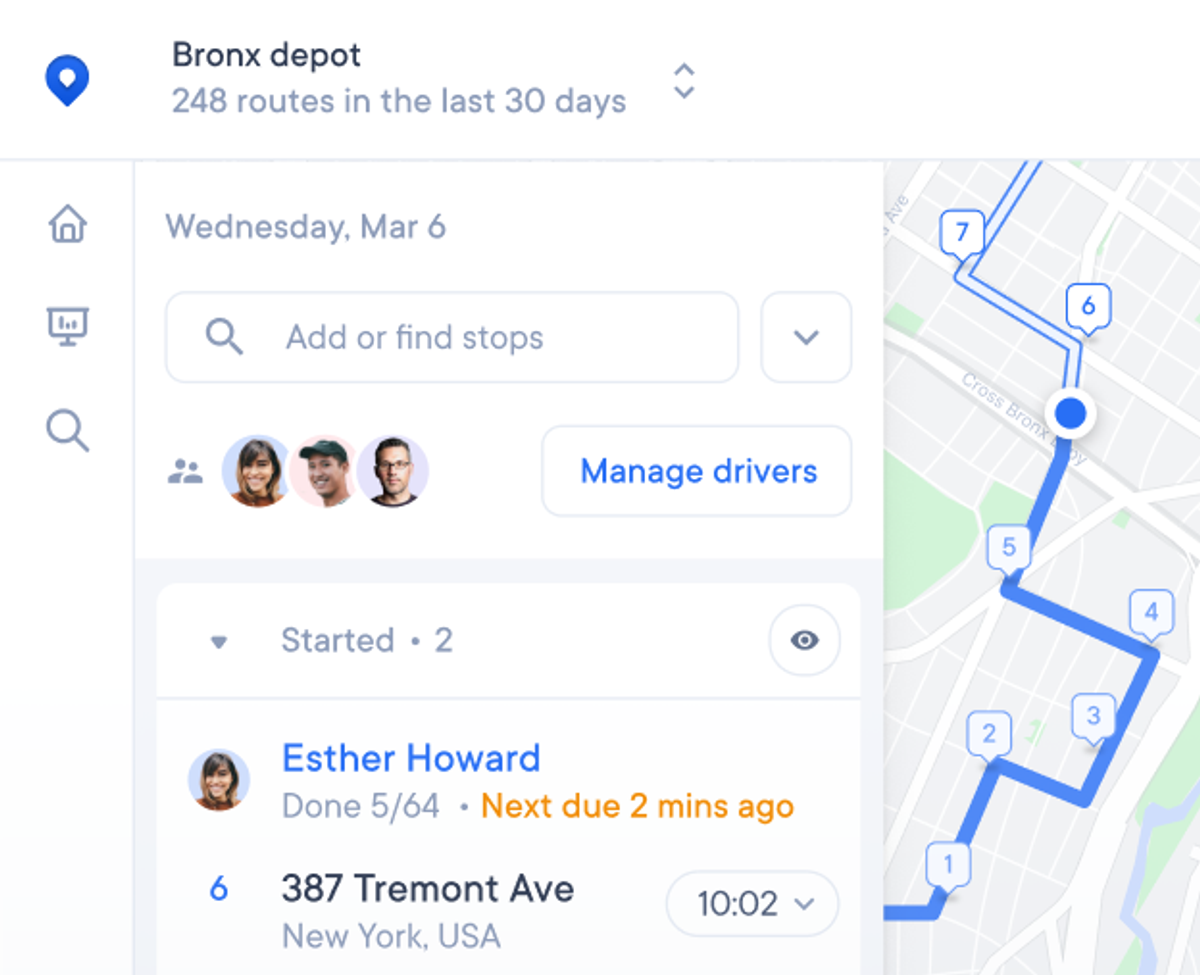
Spaghetti routes that drive up your fuel costs. Drivers finishing their shifts three hours apart. Missed delivery windows that put you at risk of breaching your SLAs.
Route planning shouldn’t be like this.
Delivery zones help you contain the chaos of daily route planning, control costs, keep your best drivers happy, and scale your operations without breaking a sweat.
This guide covers the practical strategies today's mid-to-large courier companies use to draw, manage, and optimize their delivery zones.
You'll see how dispatchers actually apply zones to balance workloads and protect margins – and how to set up your own zones in minutes using modern software for optimizing routes.
If your delivery routes zig-zag across town and your drivers complain about uneven workloads, delivery zones might be the missing piece in your operation.
What are delivery zones in courier operations?
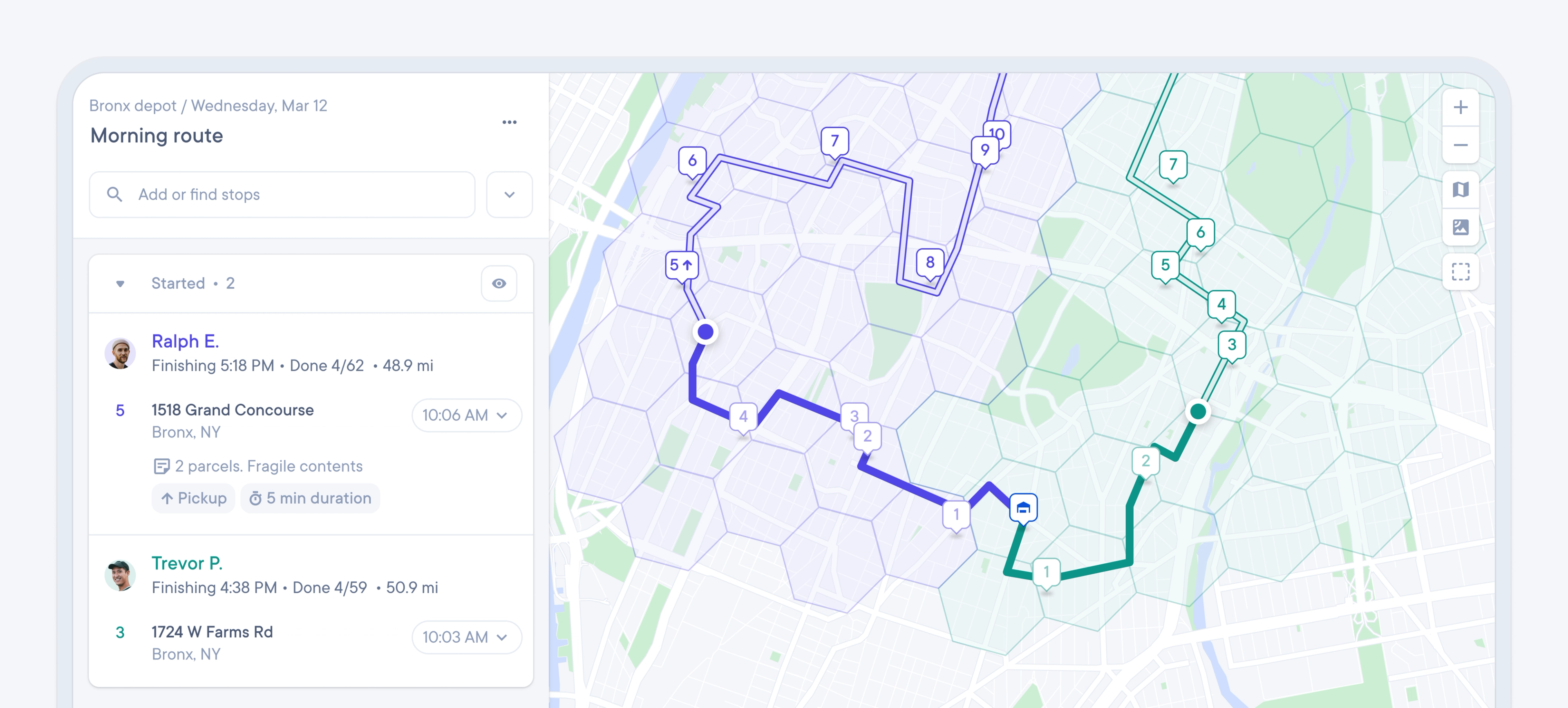
Delivery zones are defined areas on a map that couriers use to group stops and assign drivers, helping dispatchers plan faster and reduce overlap.
Delivery zones are geo-fenced territories that help dispatchers tame operational chaos by allocating certain areas to specific drivers.
They can be created (and updated) in most modern last mile management software. And while they’re a nice-to-have for courier teams of 1-5, they’re a must for any business making upwards of 5,000 deliveries across single or multiple depots.
Strategic benefits of delivery zones for couriers
Delivery zones aren’t just about coverage – they’re a strategic lever you can pull to control costs, protect SLAs, and give drivers predictable, sustainable workloads.
Here’s a look at what courier companies are achieving using delivery zones today:
Cut operating costs
Zones reduce total miles driven by keeping drivers clustered in tight territories instead of crisscrossing each other on spaghetti routes. And fewer miles means lower fuel bills and fewer wear-and-tear expenses.
Retain your best drivers
Give drivers their own zones and they’ll get to know the fastest routes and problem areas like the back of their hand. That means they can squeeze more deliveries into each route, boosting their hourly earnings while keeping your margins healthy.
Boost client satisfaction
Shorter routes grouped in smaller zones will slash your delivery times. That will let you promise aggressive ETAs knowing none of your drivers are going to be sent on a city-wide scavenger hunt that sends them way off schedule.
Scale beyond a single depot
With delivery zones, growth becomes modular instead of requiring a complete ops overhaul every time you expand. Simply split an overloaded zone when it maxes out – and add new zones when you enter new zip codes.
Get trucks out the door faster each morning
Last mile delivery software like Spoke automatically assigns parcels to the right zone. That means your team can quickly stage, sort, and load parcels by delivery zone, getting your drivers on the road faster.
Keep workloads balanced
Delivery zones help dispatchers prevent overstuffed routes and uneven assignments. By tracking zone-level stop counts and delivery times, managers can re-draw boundaries when workloads become lopsided.
Reduce failed deliveries
When drivers run the same zone every day, they get to know which buildings have broken buzzers, which recipients want back-door drops, and who’s always in to accept deliveries for their neighbors. This improves first-time delivery rates and cuts down on costly re-attempts.
Create clear accountability with subcontractors
Assigning subcontractors to fixed zones creates accountability. Want to measure their performance? Simply pull up zone-level metrics on late rates and customer complaints.
Prevent depot overlap
Dispatchers can use delivery zones to assign each depot or micro-hub its own defined service area. This reduces overlap, prevents drivers crossing between depots, and keeps operations efficient.
Instantly adapt to real-time demand
Zones allow you to scale your operations up and down without rebuilding every route from the ground up. Has the holiday season driven a surge of demand in an urban hotspot? Split it temporarily into multiple zones covered by multiple drivers. Slow Tuesday in the suburbs? Merge two quiet zones so one driver covers both.
Core delivery zone strategies used by dispatchers
Delivery zones can make or break your profitability.
Here are the strategies today’s most efficient dispatchers use to run their operations as efficiently as possible:
Driver-familiarity zones
Where you can, assign drivers to zones where they live. They’ll know which streets flood in heavy rain, which intersections back up at rush hour, and what streets to avoid when the schools are leaving.
Demand-density zones
Use heatmaps and historical order data to balance your drivers’ workloads. That might mean assigning one driver 60 stops in a tight urban zone and another 40 across a longer route around the suburbs.
Traffic-aware boundaries
That junction which stops traffic for 20 minutes every rush hour? Draw your routes around congestion chokepoints like that to keep your fleet moving as efficiently as possible.
Flexible, dynamic zones
Never treat boundaries as if they're set in stone. “Set it and forget it” delivery zones quickly become a recipe for mismatched driver workloads and inefficient routes. Redraw boundaries quickly to account for seasonal spikes, slow days, and depot scaling for the best results.
Alternate zone coverage
It might seem logical to bake multiple areas that don't generate many stops into one large delivery zone. But a route made up of a handful of deliveries scattered at opposite corners of a 40-mile territory will kill your margins.
So instead, split those sprawling zones into smaller territories and service them on alternating days. That prevents drivers wasting hours driving along highways in empty zones or recipients waiting a full week between deliveries.
How dispatchers actually create delivery zones
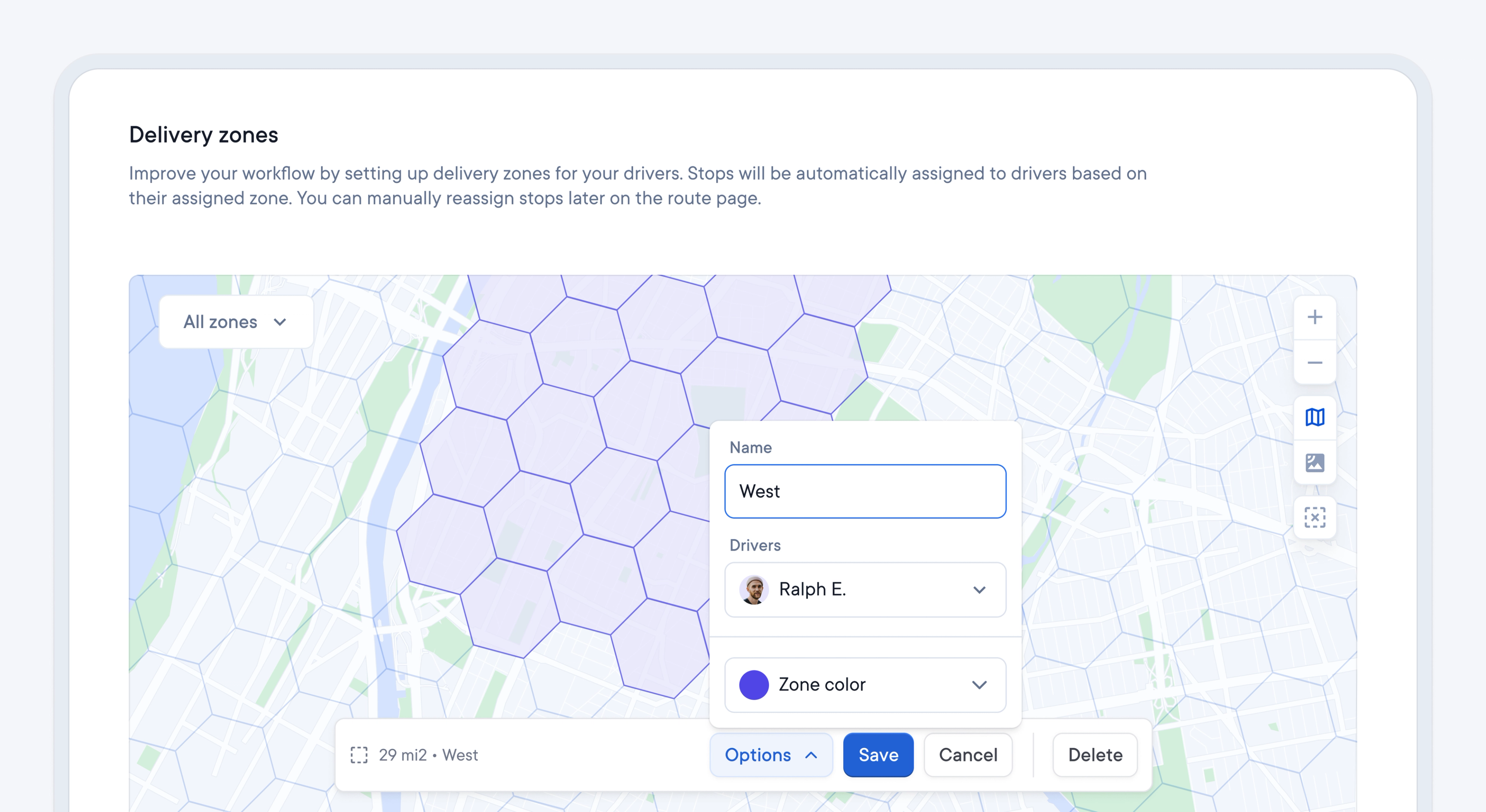
Drawing and assigning zones to drivers is a piece of cake in Spoke Dispatch
Once your zones have been set, you can name and color code them to easily visualise and track them.
You can create as many zones as you like – and assign as many drivers to each zone as you need.
Then just import your route data as normal. With delivery zones set up, our software will automatically assign stops to your drivers based on the zones those stops are in.
Any stops that fall outside of your delivery zones will be automatically added to the route of the most suitable driver when the route is optimized. This means you don’t need to worry about covering every inch of your service area with zones. Just map out the key areas and our algorithm will automatically account for any deliveries that fall outside of them.
If you want to change your delivery zones, you can redraw them at any time. Simply adjust the size of each zone and which drivers are assigned to each one, then reoptimize your routes.
That makes it easy to adjust your zones in real-time based on your live order data.
Advanced approaches: AI-driven territory planning
Some route planning platforms now use AI to automatically plan and adjust delivery zones. An algorithm forecasts demand and tracks live traffic updates, then redraws zones and balances driver workloads on the fly.
This is definitely where parts of the industry are heading – particularly massive last mile operations running hundreds of drivers across huge service areas.
But we believe most courier firms are better off leaving their delivery zones in the hands of human dispatchers.
AI might redraw a zone boundary because the math says so. But it won't know:
- Your fastest driver is on vacation, so their usual high-volume zone needs temporarily scaling back
- The "problem customer" who complains constantly needs to go to your most diplomatic driver
- How to assign the most suitable drivers after a big client just made a massive last minute delivery order
- Road construction just closed a main artery for three months, splitting what used to be a cohesive zone
That's why the control and responsiveness of dispatcher-managed zones – where you draw the boundaries, assign the drivers, and adjust on your schedule – beats handing that authority to an algorithm.
Measuring zone performance and when to redraw
As mentioned, delivery zones aren't "set and forget". You should adjust them as demand shifts, your fleet grows, and construction work causes congestion you’ll want to avoid.
Bad zones announce themselves pretty clearly. Look for:
- Drivers consistently finishing late in the same territory
- Missed SLA commitments clustered in the same zones
- Overtime costs piling up in one zone while others stay within budget
- The same driver constantly requesting help or backup
But ideally, you’ll nip the problem in the bud before it starts affecting your bottom line. Track these metrics for each zone to spot early signs your zones need redrawing:
- Route completion percentage. Which zones regularly have unfinished stops that get rolled to the next day?
- On-time performance. Are packages in some zones consistently sailing past their delivery windows? That’s a sign they need adjusting.
- Driver hours and overtime. Uneven workloads will lead to unhappy drivers. Keep adjusting zones to keep routes as even as possible.
- Customer complaints by zone. A spike in "where's my package" calls from a zone is a sign you need to adjust its boundaries.
- Average delivery time per stop. Which zones have stops taking longer than expected?
- Fuel consumption per zone. High fuel costs relative to stop count means too much driving between deliveries.
- Cost per delivery by zone. Divide the total expenses needed to cover a zone by the number of completed stops to identify unprofitable territories you might need to redraw.
When you spot these patterns, redraw your zone boundaries – even if it's only a temporary fix. Try splitting overloaded zones or allocating more drivers to them as a first line of defense.
If that doesn’t fix the problem, it’s time to make some major adjustments to your zone boundaries. Luckily you’ll have real-world data to work from to help you create the most effective zones possible.
Delivery zones as a strategic lever
Delivery zones aren't just lines on a map. They're how you stop bleeding money on wasted miles, keep your best drivers happy, and hit the SLAs you promised clients.
Get them right and you'll be running tight routes with predictable workloads instead of firefighting daily chaos.
But to do that, you’ll need route planning software that lets you draw delivery zones in minutes, automatically assign stops to the right drivers, and adjust boundaries whenever your operation demands it.
And that’s where Spoke Dispatch comes in. No algorithms making decisions you can't override – just intuitive delivery zone management that scales with your business.