We all like great service – but we love the kind that turns a routine parcel delivery into a memorable experience. In a nutshell, that’s customer delight.
But as a last mile courier service, how do you create this kind of recipient experience when your retail client owns such a large part of the buying process? And how can you ensure your clients keep shipping parcels with you?
This article explains how to upgrade your last mile delivery notifications, delight recipients and strengthen your client relationships.
What are Last Mile Delivery Notifications?
Last mile delivery notifications are automated alerts sent to recipients during the last critical leg of a delivery – from dispatch to the doorstep. Sent via SMS and email, they directly reduce the feelings of uncertainty a recipient has about the time of a parcel’s arrival. This also reduces the chance of the recipients being out when the delivery attempt is made, which reduces failed deliveries and by extension, increases the bottom line.
Since the have raised customer’s expectations of courier performance and speed, the last mile now carries the highest visibility within the journey – with recipients only remembering how well (or poorly) it got to their hands. The notifications sent during this final stage therefore directly shape a customer’s delivery experience and satisfaction.
Here are a few of the many milestones where recipients can receive delivery notifications:
- Ready for dispatch
- There's been a delay
- Morning-of reminder
- A reschedule confirmation
- Out for delivery
- Approaching the next stop
- Attempted delivery or recipient not home
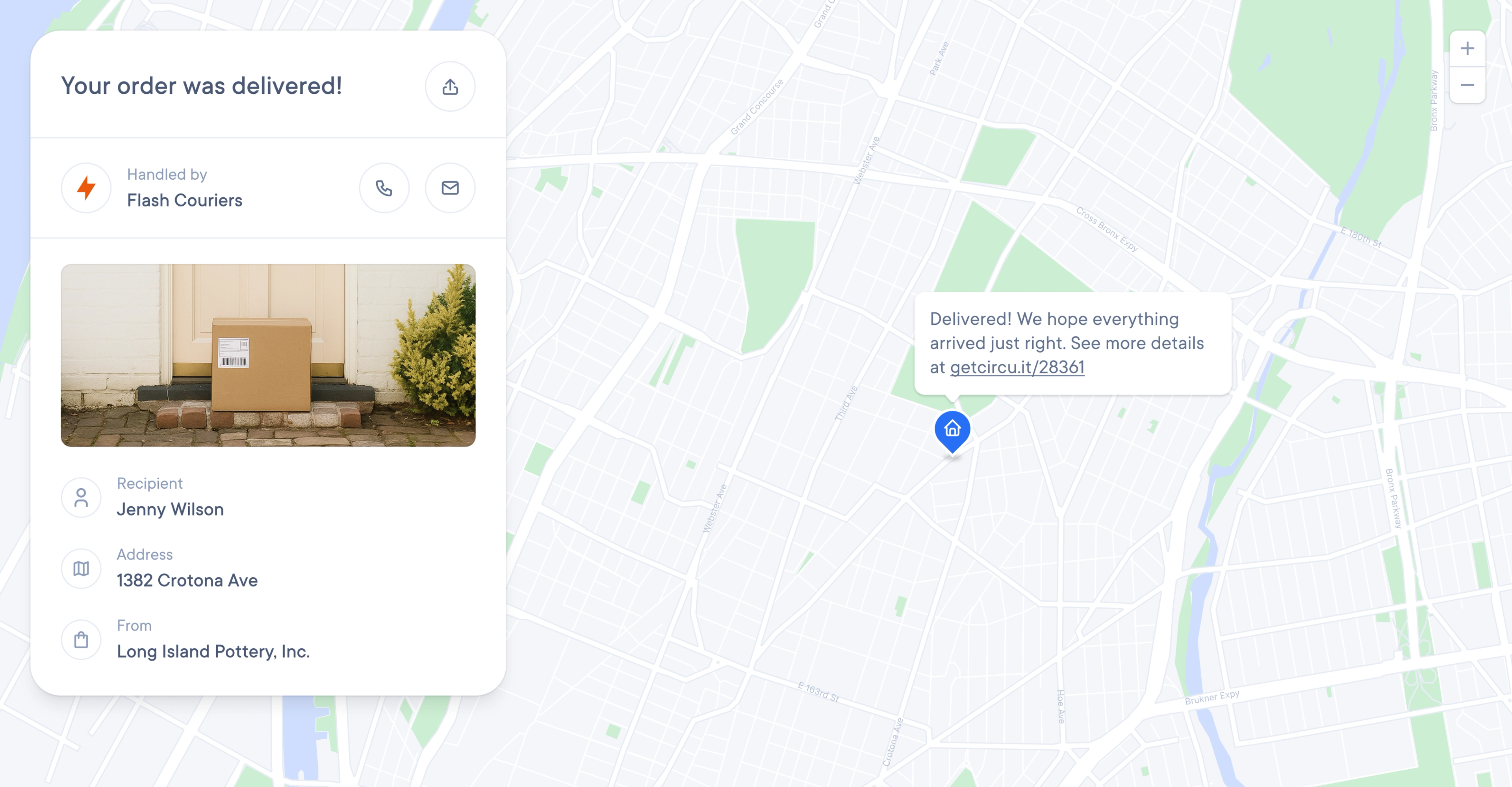
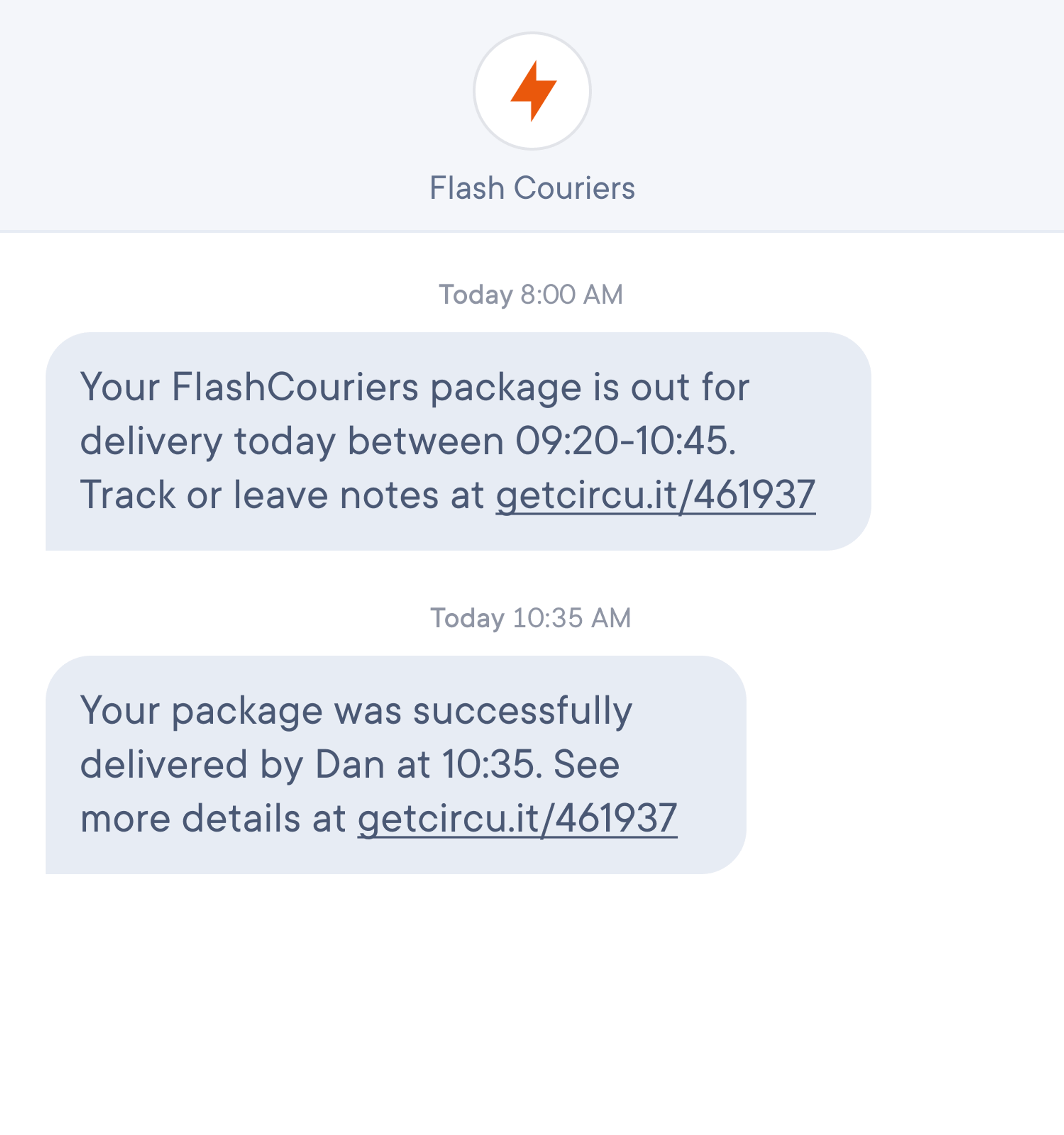
- Delivered
Each notification comes at a pivotal moment in the journey – setting up the recipient’s expectations – and influencing their impression of the courier’s service. Any improvements you make to notifications should remove friction and delight customers.
7 Ways Delivery Notifications Can Delight Recipients
Here are seven practical ways, based on psychology and real courier examples, that you can use delivery notifications to inform customers in real-time.
- Live tracking & dynamic ETAs
- Personalized & localized messaging
- Branding for trust
- Proactive, stage-based updates
- Multi-channel communication
- Recipient interaction options
- Proof of delivery & feedback
Let’s dig in.
1. Live Tracking & Dynamic ETAs
Great last mile notifications directly impact how recipients feel about your delivery business.
The usual scenario a recipient experiences is this:
It’s Tuesday, and your customer’s waiting for their daughter’s gift to be delivered, for her birthday tomorrow. The only clue they’ve got from the courier is a message saying: “Delivery between 8am and 6pm.”
As time ticks by, the feelings of uncertainty rise. By 4pm, they’re calling you to find out when the parcel will arrive.
Now, let’s flip the script of how your last mile notifications could work for recipients – giving you a clear business differentiator and efficiency booster.
This can be the new reality for your customers:
At 12:17pm the customer gets a notification.
From: Magnetic Couriers
Message: “Your delivery is stop 6 of 12, ETA is 1:05-1:35pm. Track your delivery here [link]”
They click the link, see a live map with the driver a few suburbs away. At 1:20pm the van arrives on schedule. No worrying. No guessing if it will arrive in time.
This is how real-time tracking, and dynamic ETAs turn the last mile of delivery from a mystery to a predictable, low-stress experience. And your recipients will notice this.
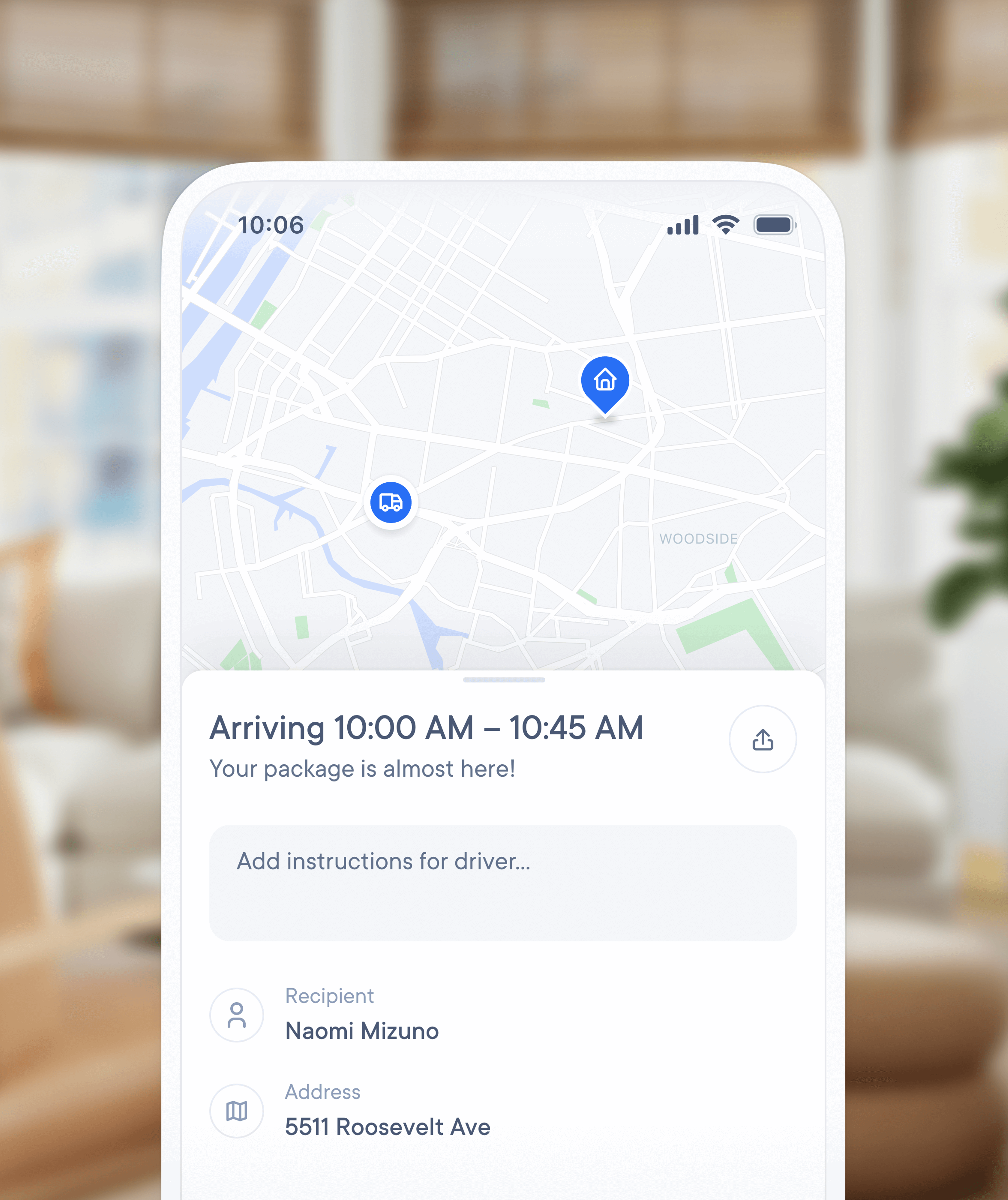
Leaders like UPS have made this standard, so recipients can watch their driver’s route in real-time – with an ETA that automatically adjusts to account for traffic delays. Likewise, Spoke Dispatch has dynamic tracking pages that show:
- An up-to-the-minute ETA
- The recipient’s position in the delivery queue
- Live maps with driver location
- Traffic-sensitive ETA updates
- Delivery notes
That’s the competitive advantage. Studies have found that over 90% of customers want to track their delivery in real-time, with many people choosing one retailer over another based on better delivery visibility – both great selling points when you next pitch for courier contracts (if you have notifications set up). Real-time updates reduce the number of “Where’s my parcel” calls, minimize first-attempt failures and can let your dispatcher adjust delivery routes on the fly, to meet commitments.
But the best couriers don’t just bolt on tracking to their legacy systems. They integrate it into the whole last mile management ecosystem, with alerts like maps with moving driver icons, “You’re next” alerts that trigger one stop ahead, delay notifications if the schedule slips, and dynamic ETA updates if the expected route changes.
In a competitive market, where many couriers still rely on vague all-day windows, being able to give precise, real-time ETAs is a clear, visible point of difference that your competitors can’t fake.
2. Personalized & Localized Messaging
A last mile notification that isn’t just another generic ping – one that knows your name, your suburb and perhaps even the weather that’s rolling in carries the quiet power of personalization. Imagine if you sent messages like this to your customers: “Hi Pete, your Bondi delivery will be there by 3:10pm, just before the storm rolls in from the sea.”
That kind of message isn’t just “your parcel is on its way”, it feels more like “your parcel is coming to you.”
A study on AI-driven personalization by Forrester and Adobe (2025), showed that “Nearly three-quarters of buyers expected organizations to understand when, where, and how they want personalized interactions.”
Importantly for client retention, the Narvar report Driving Long-term Loyalty with Post-Purchase Innovations cited 53% view the post-purchase period as the most emotional part of their experience and that meeting those expectations differentiates your brand – with 94% expecting to be informed about delivery status without having to ask.
For these reasons, DPD UK adds real-time map location pins and neighborhood references in their updates (“Your driver is in Redfern, three stops away”) and similar to the Spoke Dispatch dynamic personalization fields and language settings, Stuart allows you to embed local language or region-specific delivery terms in the SMS and email templates. DHL take this further by offering on-demand options – for instance allowing recipients to reschedule or reroute a delivery via a link if the delivery timing isn’t convenient.
All these touches make the whole delivery experience feel more human, versus a templated text.
Personalization does double-duty – it also acts as operational insurance for you. Attentive research showed when a recipient recognizes the message is specific to them, they’re more likely to read, retain and act on it, which in turn means less “Where’s my parcel?” calls, and higher delivery success for you.
3. Branding for Trust
Let’s step back into the recipient’s shoes for a moment:
Imagine they’ve ordered a limited-edition sneaker. Two days later, their phone buzzes with this message:
From: NiceKicks: “Hi James, your kicks are out and about with our driver Emanuel, and they’re due to be with you between 11:15am and 12:00pm today. Track their steps here: [link]”
Unbeknown to the recipient, the store’s courier uses ‘branded’ notifications. What the customer sees and thinks, is a message that looks exactly like it’s come direct from the store – same colors, logo and even the cheeky tone that matches their shop name. When they click, the tracking page is wrapped in NiceKicks branding.
Compare that to the usual notification, from a generic courier:
From: MrCourierABC
Message: “Your parcel is being delivered today. Track here: [link]”
The clear difference is that one feels like an extension of the buying experience the customer loved. The other is detached – almost like the parcel is just one of a truckload, with no special care being taken of a special purchase.
That’s exactly why leading couriers – from big powerhouses to small niche ones – are making retailer-branding part of their delivery notifications.
For instance, Spoke Dispatch Premium plan allows couriers to display their company logo on the tracking webpage and use a custom SMS sender ID, so the text message appears to come from “ACME Couriers” (or the sender) instead of a random number.
Couriers can either add their retail client’s branding to the notifications, their own courier branding, or both (e.g. delivered by MrCourierABC). And it’s this kind of service that differentiates you from competitors and keeps your clients (and their recipients) delighted.
The scientific evidence is plentiful. A global 2023 Edelman Brand Trust Report showed when people trust a brand, they’re 59% more likely to purchase its products and 67% stay loyal to and advocate for that brand.
That’s why the best couriers treat branding alignment as both a competitive edge, and a service to their clients. They:
- Allow retailers to embed their logo and colors on tracking pages
- Use custom SMS sender IDs, instead of random numbers
- Let clients tweak or write their own notification wording and tone to match their brand personality
- Add small, brand-relevant touches like photos or personalized thank you messages.
All these subtle brand touches can be decisive when businesses are choosing a courier service.
In a crowded competitive market, your competitors, who are already allowing these types of brand and trust-building moves, aren’t just delivering parcels for clients. They’re delivering trust.
4. Proactive, Stage-Based Updates
The day a parcel arrives should feel as predictable as a train or bus schedule. When you’re waiting for public transport and glance at the app or arrival screen, you know it’ll be here in 2 minutes – and it is.
Here’s how the same certainty can happen for your customers:
A small courier using Spoke Dispatch can configure three automatic SMS updates: Out for delivery. A few hours later: Three stops away. Then: Delivered – thanks for choosing us. Each one lands like a reassuring tap on the shoulder.
This staged approach to communication turns a delivery into a set of clearly phased updates that progressively reduces recipients’ anxiety. And if there’s a delay or change, a real-time system update to the ETA prevents them from feeling anxious about its whereabouts. Food delivery apps – Dominos, Uber Eats, Deliveroo – pioneered this practice and it’s now a widely accepted (and expected) norm to keep recipients informed at each milestone.
Global courier service provider DPD, sequence their proprietary ‘Predict’ delivery notifications from dispatch to doorstep to significantly reduce inbound “checking” calls – because they keep recipients engaged, reassured and ready to receive throughout the parcel’s journey.
Stage-based updates are table stakes for couriers, and failing to do them makes a courier seem behind the curve. But by doing them well with the right message pacing and tone, and sending them at the right time, it becomes a competitive lever for you.
5. Multi-Channel Communication
People have busy lives, so they may miss your delivery update email. Others ignore SMS messages but open WhatsApp immediately. Multi-channel communication isn’t just customer preference or convenience – it’s also risk mitigation that lowers first-attempt failure rates. In-demand couriers understand that different people need updates on different platforms, in different ways.
So, they design their last mile notifications using multiple channels.
Each channel has its advantages, but leading couriers primarily use SMS text messages and email (often with an option for app push notifications). By offering both, it ensures the message gets through the way the customer prefers, and where they spend their time.
SMS has widespread use: It's a communication staple for over two-thirds of the global population, and according to Gartner, text messages have a 98% open rate and 45% response rate. Contrast that to corresponding Gartner figures of 20% and 6% for email, and it’s hard to ignore texting.
For last mile delivery notifications, there are pros and cons for each:
SMS notifications
SMS messages do have high open rates, and provide instant, on-the-go alerts to recipients. However, they have character limits and may incur extra costs for the courier.
Email notifications
Emails allow you to include more detailed information (order details, hyperlinks, instructions), can be branded for a professional look and include longer trails of information such as the full parcel tracking history, for the recipient to check/review.
Many of the delivery notification software offerings enable both email and SMS. For example, Spoke Dispatch lets you choose either or both for each stage of the last mile journey. DPD and Stuart blend SMS, email and push notifications to meet predicted delivery windows and let customers interact however they prefer. You can do the same. Even small-medium-sized courier companies can access Spoke Dispatch, where you can set SMS and email templates per job, plus it provides in-app tracking.
Channel choice really does matter. According to Twilio’s State of Customer Engagement 2024 report, when in-person isn’t an option most people prefer email (50%) or messaging apps (40%), but tread cautiously with the rise of AI, because chatbots (15%) and video (10%) are the least favored methods of communication.
Awareness of these personalization preferences forms the blueprint for your success.
Operationally, multi-channel communication reduces first-attempt failure rates, cuts customer service loads and gives you more engagement touch points post-delivery, that builds your brand profile and awareness.
6. Recipient Interaction Options
Pretend again you’re a parcel recipient, waiting on a delivery:
A message arrives: “Your driver is next to leave. Are you home? Want us to leave it with a neighbor or change the delivery address? Tap here to let us know [link]”
A quick tap on the message and a potential problem, or delivery failure, is avoided before it exists. No phone calls to customer service. No “Missed delivery” cards left. No costly re-attempts at delivery. No frustration.
Empowering recipients to communicate their needs, provide special instructions or make last-minute adjustments, delights them.
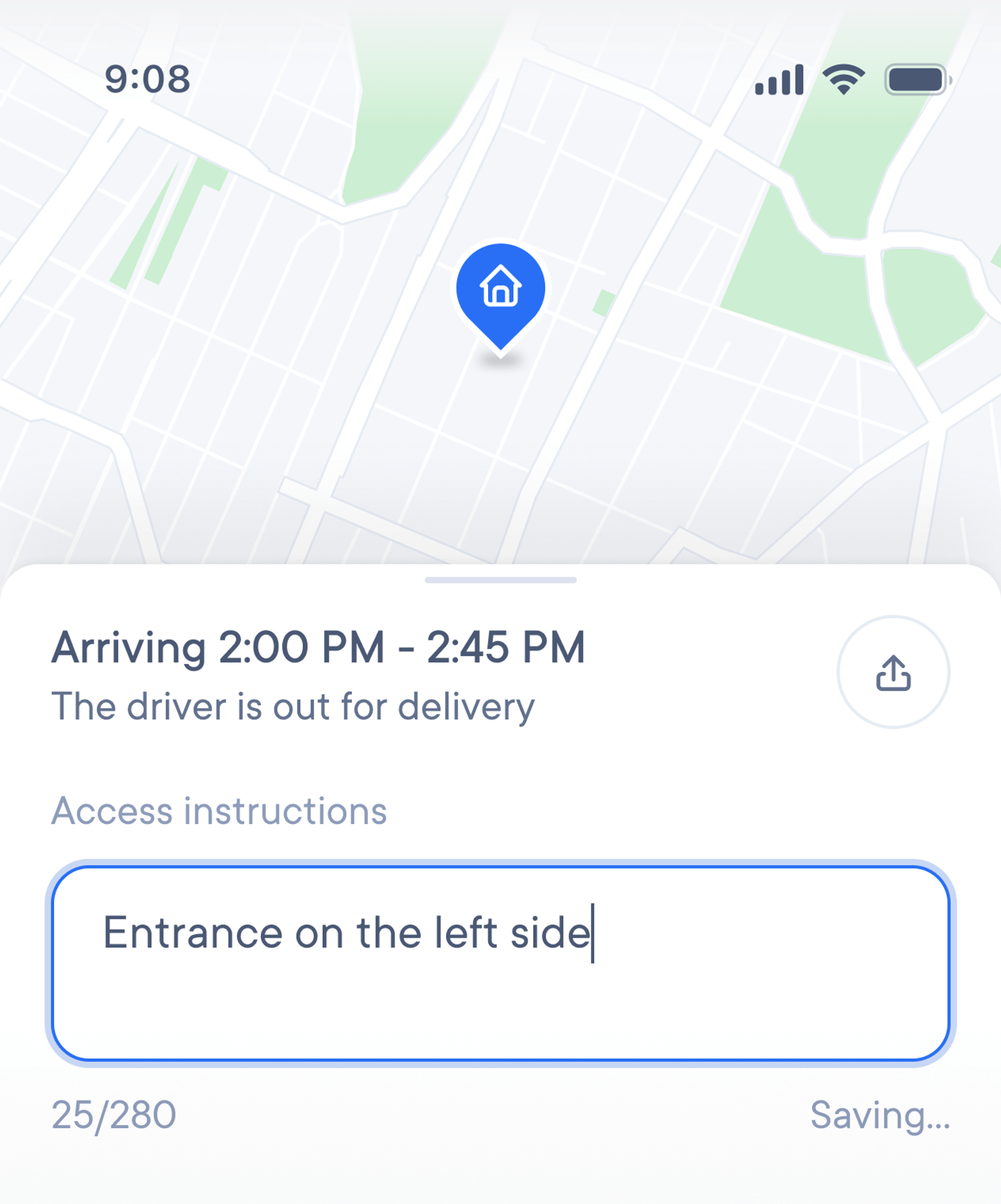
For example, if the recipient knows their gate or office is hard to find or they’re briefly stepping out, giving them the option to let you know can prevent a failed delivery.
Some last mile management software, like Spoke Dispatch, include a link to a tracking page or portal where the recipient can add helpful notes for the driver like “Second house down driveway, red front door, leave on porch” to avoid confusion or failed deliveries.
Another option in advanced delivery notification software is two-way notifications – letting recipients respond to notifications or text the driver/dispatch directly in real-time. While this isn’t feasible for smaller couriers, providing contact numbers, or tracking page links in the notification can help resolve issues quicker.
Options for interactive delivery notifications aren’t a simple value-add any more – they’re now a competitive necessity. Couriers offering them are setting the benchmark, and those who don’t risk looking inflexible and out of step with people’s expectations.
7. Proof of Delivery & Feedback
Here’s another way to give your customers certainty and control:
A photo pops up in their messages or inbox, a few minutes after the promised delivery window: showing their parcel, safe against the door or in the letterbox, complete with a timestamp. Alongside it, a short note: “Thanks for choosing us – tell us how we did [link]”
While the transaction may be over and the delivery complete, the conversation should continue.
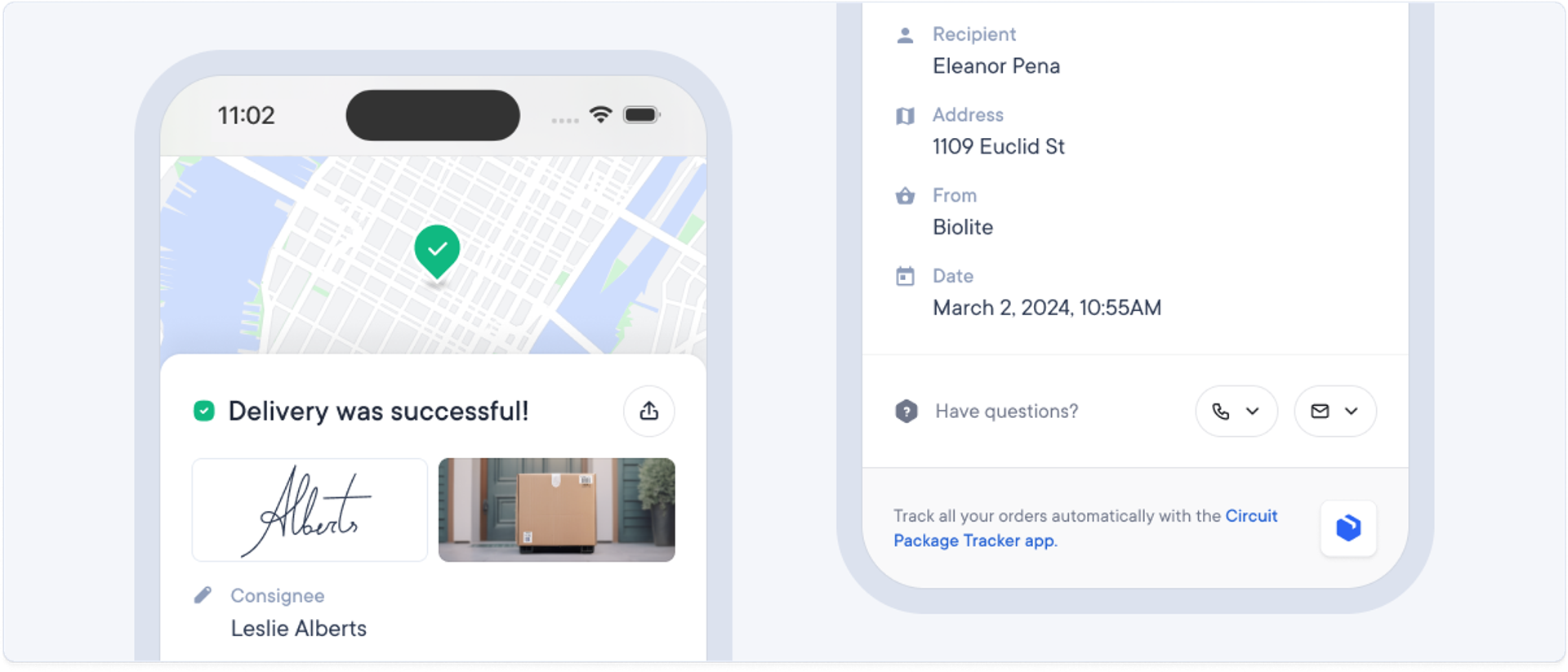
Proof of delivery (POD) isn’t only about security. It’s closure for the recipient. While many couriers send proof (a photo or signature) as confirmation the delivery is complete, it’s the perfect time to open a feedback loop that can turn an okay experience into a great one.
For example, Amazon and Uber Eats always ask customers to rate or give feedback on the delivery and provide comments – and they use these to continually improve service and experience. For a smaller courier, sending a thank you note like the one above is an easy feedback method that increases trust, raises customer delight and pinpoints your own areas for improvement. Feedback received may even highlight unknown opportunities for new offerings, services or partnerships.
The POD moment is also a marketing moment. Custom, branded POD pages can link to usage or care instructions, helpful tips, or loyalty programs. Giving further help while the most recent experience is fresh, lifts the likelihood the goodwill will continue to flow your way.
While proof gives peace of mind, feedback loops open two-way conversations.
Handled well, proof of delivery changes from a defensive move by couriers, to becoming an active loyalty building tool. And instead of closing the door on contact, it opens and pushes the ripple-effect of delight in larger arcs through your service.
Taking your Delivery Notifications from Bland to Brand
By transforming your last mile notifications into branded, interactive moments, you’re upgrading your business from a “package delivery service” to one that creates trust, clarity and emotional connection. These seven tactics are not only practical ways to do that, but they’re also psychology-backed and battle-tested by courier giant operators like DPD and Stuart.
Your competitors may already be using them in intelligent ways – now’s your chance to not just catch up but lead with delight.
Sign up for a 7-day Spoke Dispatch trial today