Driver churn is the silent profit killer of last mile delivery.
When driver churn hits nearly half of new hires within the first 90 days – as Amazon's leaked attrition data revealed – it’s clear the courier industry isn’t really facing a labor shortage. It's a retention crisis that needs fixing.
The first step is realizing that retention begins before the first day and continues through every route, vehicle, and customer interaction.
Solving it also means implementing driver retention ideas that make your driver's job easier, safer and more predictable on an ongoing basis – which is more than days off or bonuses. Clear expectations, fair pay, realistic workloads, career paths and providing the right tools, support and recognition, all work to help retain the best drivers.
Let’s start by understanding what makes a good driver retention program.
What is a Driver Retention Program?
A driver retention program is a set of policies and practices designed to keep your delivery drivers engaged, motivated and loyal, by reducing their daily frustrations. For a courier business, this isn’t just bonuses or benefits, it’s about building a predictable, fair and supportive work environment where drivers know that staying is better than switching jobs.
At its core, a driver retention program covers pay, routes, recognition, equipment, technology and communication that's attuned to make the job less draining and more rewarding.
A successful retention program isn’t a policy manual. It shows up in a driver’s daily life, by fixing structural job frictions like bad routes, long hours, messy onboarding and unreliable pay. In turn, these levers then protect your margins, safeguard client satisfaction and differentiate you when recruiting drivers in a competitive market.
Driver retention flywheel
Driver retention is a compounding systematic flywheel. Each stage of the journey reinforces the next, so treat it like it’s a never-ending cycle:

The driver retention flywheel
Courier services who create this flywheel for their team don’t just reduce churn and turnover costs, they strengthen their service consistency, reduce failed deliveries and cultivate a reputation that attracts better drivers in the first place.
The six driver retention ideas below – backed by research and expert insights from Brad Clements (HR Recruiter & Process Automation Specialist, Falcon Express Transportation) – break down the most effective ways courier companies are turning retention from a cost problem into a competitive advantage.
“When I first got into this industry five years ago, I was shocked at the level of churn. And the only thing more shocking was the operator's lack of awareness of the problem.
But worse still, even when they were aware of it, their way of dealing with churn was to throw more bodies at the problem – which of course means devoting an ongoing amount of your cash flow to advertising or a recruiter, plus the time and resources needed to screen, select and onboard. That cycle never ends well.”

1. Hire for Attitude, Fit, and Set Expectations
Retention starts before day one – with who gets through the door. In last mile delivery, bad hires cost an average of $8,000+ per driver, plus they disrupt dispatchers, scramble routes, put pressure on remaining drivers and risk service level agreements (SLAs) slipping. So it’s in your best interests to get it right the first time.
Brad Clements, HR Recruiter at Falcon Express, calls this early filtering approach, “front-loading retention.” To achieve it he aligns the advert, the applicant and the screening process, so he’s only interviewing the candidates who ‘best match’ the attitude and approach needed to be a successful courier driver.
The process uses 3 steps: source on the right platform, be honest in your ad, and remove 50% + of applicants up front through filtering.
- He doesn’t recruit on a one-size-fits-all basis. By matching the job/need to the channel used – Craigslist for volume, ZipRecruiter for quality, or Indeed for long-term fit – he ensures a higher suitability (and stickability) to the role.
- He doesn't exaggerate in his advert. By not overpromising on pay, hours or conditions he avoids misfits with the company culture and disappointed drivers resulting in early churn. Being transparent up-front, means you’ll only attract the candidates who want the job as is.
- He leans hard into filtering applicants before speaking to anyone. By automatically sending applicants a 13-question survey, he scores and sorts them into four psychologically-based ‘suitability’ profiles. Only the top candidates who match the mindset and accountability needed for courier work get an interview.
Note: Research suggests that using these types of pre-employment assessments can improve long-term retention. One study by Psychometrics Canada found that filtering candidates for specific personality traits tied to reliability can reduce turnover rates by 10%+.
“Churn is a product of many things. But the one thing I've learned about recruiting is that it really does start from the very beginning. Meaning the ad. I think a lot of people create ads and exaggerate the pay, or diminish the hours, or they try to make it sound easy. But you've got to be real with people. So don't create unrealistic expectations, because then you’re literally setting up your drivership for disappointment right from the beginning.
Another big aspect is the screening and filtering. I front-load driver retention by automating my entire screening workflow. When people fill out the initial contact form, they’re immediately sent four yes/no questions that disqualify over half the pool instantly.
Then, qualified candidates get a 13-question multiple-choice survey. I built it after using ChatGPT’s deep research function to study peer-reviewed psychological profiles of drivers most likely to succeed – those who are committed, accountable, problem-solvers, and likely to stay long term.
I’ll then score their responses and sort them into four quality tiers. I’ve done this mostly for drivers, but it also works for dispatchers and managers.
I only engage the top tier (or top two if I need bodies), and it’s improved retention by about 80%. If they score in the very top bracket – a priority candidate – I call them within 24 hours.”
2. Build Strong Onboarding and Mentorship Programs
The first 30-90 days are critical for drivers – Amazon churn rates prove it. If they feel unprepared, even well selected drivers can leave when they’re hit with learning new routes, new software, and managing time sensitive client demands.
Instead, a well-structured onboarding program like the one outlined below helps drivers feel welcome, prepared, and supported. This ensures new hires arrive informed, and the manager then does real-time, first-day training with a hands-on walkthrough of delivery routes and follow-up coaching at the end of the day to ensure comfort and clarity.
Driver onboarding 1: Pre-start preparation
Goal – Drivers arrive on their first day feeling informed, confident and not overwhelmed.
- Send 4-6 short pre-start training explainer tutorials to be watched before day one (videos, slides, PDFs, links to website, documentation or Google docs).
- The explainers should cover fundamentals like driver app/software basics, warehouse flow, compliance, van loading, delivery protocols.
- If using video, they don’t need to be long or expensive – they just need to explain the fundamentals of the business – simple Looms or quick videos on your phone are perfect.
Driver onboarding 2: First-day and early training
Goal – Drivers are given hands-on support, software training and team relationships begin to be built.
Hands-on walkthrough of their route, before solo runs begin.
- During week one, pair-up for a ride-along with another driver, to physically see, feel and hear what’s expected during daily routes.
- Daily debrief sessions with the manager or dispatcher, for the first week, to check confidence and fix mistakes early.
- Train directly in the last mile software they’ll use, to build familiarity and avoid double learning curves.
Driver onboarding 3: Ongoing mentorship (30–90 days)
Goal – Drivers directly access experienced drivers, ask questions and create a give-and-receive feedback loop.
- New hires are paired with experienced drivers/mentors for structured support.
- Encourage mentors to share not just operational tips, but culture and “unwritten rules.”
- Some companies schedule regular mentor check-in calls with new drivers, to ensure the job matches their expectations and address concerns early – before a driver quits in frustration.
- Suggested check-in cadence: daily in week one, then once-a-week through to 90 days.
- Send a quick survey (3x multiple-choice and 1x open text reply question) to check driver confidence, onboarding, training and review any performance data – to head off early churn risks.
- Celebrate small milestones (first week, first 100 stops) to build pride and connection with the team
3. Competitive Pay, Benefits and Tenure-Based Raises
Retention hinges on fairness. When pay doesn’t reflect the demands of their routes, drivers quickly notice longer hours, unrealistic metrics and disorganization. Regularly benchmark pay and be willing to boost base pay or offer bonuses to stay ahead of the market – but it doesn't always resolve the situation.
Instead, foster driver loyalty by being transparent and having predictable hours and reliable compensation.
Other smart retention strategies used by Brad Clements of Falcon Express, include predictable tenure-based raises (versus Amazon-like performance-based raises) and starting modest benefits (health, dental, PTOs) 30 days after hire.
These types of incentives make drivers feel their employment is more secure, and that they’re becoming a valued team member.
Retention incentives: employees vs. subcontractors
Because many courier companies subcontract their fleet, benefits like health, dental, PTO, etc aren't applicable to those drivers, but there are other ways to incentivise them.
At Falcon, Brad implements different pay and benefit scales for employee drivers and subcontracted drivers. He’s shown that predictable, loyalty-based rewards keep drivers longer, and help you stand out from the competition, without blurring the legal lines between contractor vs. employee status.
Employees:
- Tenure-based raises to improve stickability (e.g., 6/12 months).
- Benefits (health, dental, PTO) kick in after 30 days.
- Clear career paths for future growth and skill development (dispatcher/supervisor).
Subcontractors:
- Contract $rate adjustments after X months.
- Loyalty bonuses at key milestones.
- Be transparent about them starting out as a “route floater”, with preferred or more profitable routes awarded as incentives for reliability and long-tenure.
- Perks such as fuel/phone stipends, free gear, access to group insurance.
"We give raises based purely on tenure. After six months, every driver still with us gets an automatic 1.2% increase on their pay rate. Then, every three months after that, they receive another small bump until they’ve reached 10% above their original starting rate.
It’s not so much about performance at this stage, our goal is to reward those who stick around.
Amazon’s own data shows 50% of drivers churn within 90 days, which is incredibly expensive and margin-killing. By tying pay to tenure, we reduce churn and keep quality drivers longer, because the longer they stay, the more they earn"
4. Equip Drivers with Easy-To-Use Apps and Technology
Drivers leave when the tools they rely on make their job harder. But giving drivers easy-to-use, reliable driver apps and equipment does the exact opposite – it reduces friction and keeps drivers loyal.
Practical strategies to lower driver churn include:
- Easy-to-use driver apps that streamline the day-to-day tasks of delivery confirmations, route navigation and proof-of-delivery.
- Functioning scanners
- Modern communication tools
When apps are unreliable, clunky, or require too many clicks it creates stress, slows deliveries and forces unnecessary mistakes. The resulting frustration is a major churn factor, and as a small-to-mid size courier you can’t afford that friction.
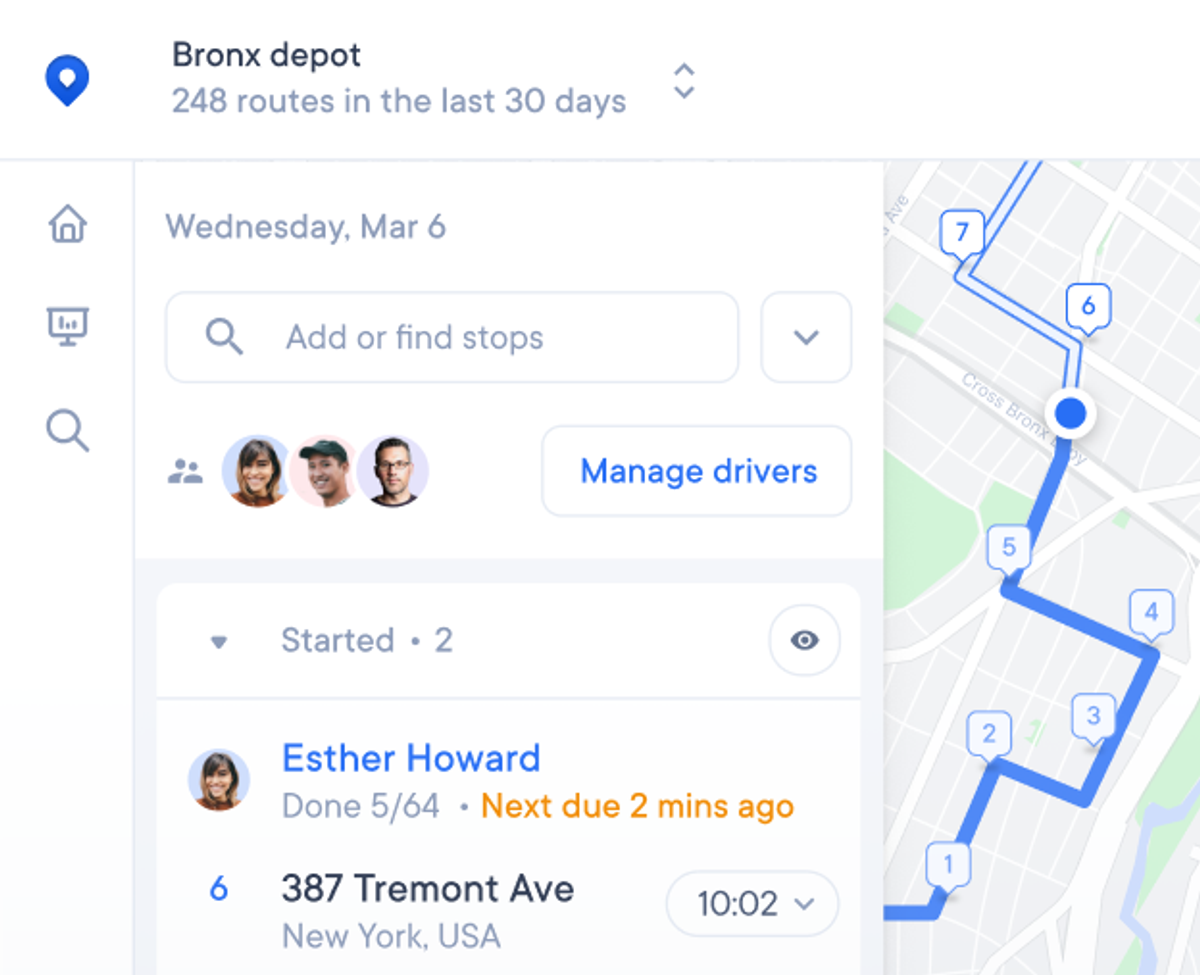
Spoke Dispatch directly addresses driver challenges
The driver app isn’t over-engineered or hard to navigate, which minimizes errors and reduces the mental load on drivers.
Best of all:
- Drivers don’t need extensive training – they can pick it up instantly.
- Minimal button presses/clicks
- Super simple UI
Ease of use:
- Proof of delivery done in a few taps
- Ability to add/delete stops by voice and use saved dispatcher notes
- Google Maps, Waze or Apple Maps navigation built-in – no app switching needed
Reliability:
- Instant route edits (if permitted by dispatcher)
- Reliable in metro, suburban and rural areas
- Live sync with dispatcher dashboard for instant updates
Empowerment:
- Scan package barcodes
- Delivery stop re-optimization mid-route
- Driver-created routes (if permitted by dispatcher)
Support:
- Dispatcher notes attached to stops
- Saved instructions for handovers
- Continuity across drivers
Drivers make fewer mistakes, are less frustrated, and feel supported, productive and valued – all of which makes them more likely to stay.
5. Create Efficient Routes and Open Communication Channels
If routes are unsustainable, even well-compensated drivers leave. Overstuffed schedules, unpredictable hours and constant overtime affects morale, fuels burnout and puts client satisfaction at risk. They also strain drivers’ personal relationships – pushing them to switch jobs.
When drivers know they can plan their personal time with a level of certainty, it reduces the possibility of negative feelings creeping in that the job is “relentless” and lowering the team’s morale.
From the get-go, retention improves with:
- Creating and assigning smarter routes
- Encouraging regular breaks
- Capping daily hours to reasonable levels
- Offering and maintaining predictable schedules
- Proactively addressing any driver health concerns
- Providing gear for those with physical issues
- Monitoring hours to prevent driver fatigue
Churn is fueled by drivers who feel their concerns are going unheard. Building a team culture helps to counter this, as does open communication, where everyone feels comfortable voicing concerns or suggestions without fear or repercussions.
Easy and reliable methods work best for sharing feedback and showing that management listens and acts on things flagged by drivers.
- Brief, weekly in-person check-ins
- A shared messaging channel for route or vehicle issues
- Acknowledge drivers who go the extra mile for hard deliveries.
"My challenge as a recruiter is I don't want to hear about “flexibility” from a candidate, or “I like working when I want, and not work when I want.” No, that's not good for courier companies. It’s something that the gig economy and gig apps has affected – the overall culture in the delivery space.
For companies who want reliability, I’m going to filter out as best as I can, those people.
My favorite applicant is the one that’s sick of the gig apps, wants consistency, and knows what time they start every day. They want work every day, and to know roughly what they’ll be doing. The other thing they love is knowing they’ll be in the same area/route (not all over the place like gig apps take you)."
6. Recognize and Incentivize Performance and Loyalty
Drivers need to feel their work matters. Without recognition, last mile drivers often feel invisible and unappreciated, which contributes to their frustration, dissatisfaction and ultimate churn.
Implementing driver retention ideas like milestone rewards, on-time delivery bonuses, referral rewards and acknowledgement from management for consistent reliability can motivate drivers to stick around and perform well. Even small public gestures like a thank you, or highlighting tenure (versus performance metrics) at driver meetings, telegraphs the message that your dedication is noticed and rewarded.
Pairing recognition with clear communication and easy-to-use software, helps create a culture where drivers feel valued (beyond what pay alone can achieve), and that their loyalty is appreciated.
“Rewarding existing drivers for making referrals has contributed to our 34% reduction in churn, because you’re now “stickier” for the driver who's making the referrals.
Typically, good people tend to identify and resonate with other good people. So in my experience, they refer statistically “better” people, than I can go out and source cold. It's kind of a snowball effect where the referrals deliver better drivers to us, and they get rewarded.”
Driver Retention as a Competitive Advantage
Driver retention is the most powerful lever a courier company can pull in 2026. For any business, every lost employee costs thousands in recruiting, onboarding, lost productivity and disruptions, while in last mile delivery, lost drivers can put your client service level agreements at risk.
The driver retention ideas covered – from hiring for culture fit, structured training and onboarding to providing easy-to-use driver apps and tools, and reasonable schedules – create a whole-of-business system that sustainably motivates your drivers to stay.
Yes, churn is very expensive. But by mastering retention, courier companies can differentiate themselves in a competitive market and lift their operational reliability – attracting better quality drivers and avoiding the money pit of constant rehiring.
Sign up for a 7-day Spoke Dispatch trial today