
Thanks to e-commerce sales being set to cross the $7 trillion mark in 2026, last mile delivery companies are being asked to do more with tighter margins and mounting operational pressures.
It’s an all-too-familiar cycle of challenges that last mile delivery operators face today:
- “Our driver turnover hit 80% last quarter. We’re hemorrhaging money on training.”
- “Failed deliveries just cost us our biggest client. What now?”
- “Customers are demanding same-day delivery, but traffic keeps getting worse. How do we keep up?”
Labor is scarce and expensive, traffic congestion is worsening, customer expectations are sky-high, and every failed delivery hits the profit margin hard. Meanwhile, Amazon and other giants continue raising the bar, making these challenges not just operational pains – but existential threats.
Industry leaders are finding ways to break this cycle.
This article explores the eight biggest last mile delivery challenges facing companies in 2026 – and the practical, field-tested solutions that are helping operators not just survive, but thrive.
1. Challenge: high labor turnover & driver shortages
Logistics is going through a worldwide labor shortage right now.
A recent Descartes survey revealed that 76% of European and North America supply chain and logistics leaders are experiencing notable workforce shortages in their operations – and 37% would characterize the resource shortage they face as high to extreme.
The fact is that good talent is hard to come by – and more expensive than ever. 47% of the 1,000 respondents to Descartes’ survey say it’s “hard” or “extremely hard” to fill open positions for drivers. And 39% think that in five years time, wages are going to be “very impacted” or “extremely impacted” by today’s workforce market conditions.
Simply put: it’s an employee’s market right now. And courier companies are having to pay top dollar to find – and hold on to – good drivers.
How to solve it:
- Introduce performance and tenure-based bonuses and incentives. Tie extra cash to the metrics that matter: delivery speed, safety records, tenure and happy customers.
“Amazon’s own data shows that 50% of DSP drivers churn out after 90 days. That kind of employee turnover is going to kill your margins. So, we put our DSP drivers on a tenure-based pay rise plan. If they can hit Amazon’s performance metrics, we want to keep them around – so we give them a pay bump every three-to-six months.”

- Provide flexible work arrangements. Some drivers want predictable Monday-to-Friday schedules, others want gig-style flexibility. Courier companies will prefer drivers that don’t value flexibility, but it could be smart to offer both to cast the widest net with their recruitment.
- Start a generous employee referral scheme:
“In my experience, quality drivers tend to recommend other quality drivers. So, we’ve set up a pretty generous employee referral scheme that pays out after a successful hire makes their first delivery, at 60 days (ensuring the new driver adapts successfully), and at 120 days (confirming long-term retention). This incentivises your current drivers to recommend people who’ll stay the distance instead of churning straight out.”
- Use technology your drivers and dispatchers enjoy. The more efficient your routes, the faster your drivers get home, and the easier the driver apps are to use the less frustration they’ll encounter day-to-day.
- Offer a clear career path. Give drivers a clear pathway beyond the delivery truck – whether that’s team leader, dispatcher, or management roles.
- Use automation to screen and filter out candidates before they even get to an interview. Below, Brad explains how a simple screening questionnaire reduced Falcon Express Transportation’s employee churn by 34% 👇
“When I came into this industry five years ago I was shocked by the level of employee churn. It’s by far the industry’s biggest problem.
But the way most operators handle turnover doesn’t help. Their solution? Throw more bodies at it.
A constant recruitment drive eats up time and money. Plus, every time an employee walks out the door, the cash you invested into training them goes down the tubes.
I’ve found that by far the best way to combat churn is better employee screening. I do this by automatically sending drivers that apply to our open positions a 13 question form to fill out before I invite them to an interview. I wrote these questions to help identify accountable applicants with good problem solving skills and a track record of sticking around, rather than changing jobs every few months.
I use applicants’ responses to these questions to filter them into four tiers. Then I only usually invite people from the top tier to interviews (although I’ll sometimes dip into the second and third tiers when we’re looking for quick hires).
Since implementing this screening process, we’ve seen a 34% reduction in employee turnover.
The other side of the equation here is that those first tier folks are going to be strong candidates anywhere they apply – and they’re probably applying to multiple companies. So you should act fast and get them into your team as quickly as you can.”
Brad uses AI automation in his screening process to “front-load retention”, it also saves hours of time by only speaking with candidates who show traits of long-serving, high-performing drivers.
2: Challenge: address accuracy & failed deliveries
Failed deliveries aren’t a new problem for last mile couriers. But they’re certainly one of the most expensive.
Whether your driver can’t find anywhere to park, can’t get access to the property to make their delivery, or the customer isn’t home – it hits your bottom line all the same.
Failed deliveries hurt your clients’ pockets, too. In 2020, 8% of first-time deliveries failed in the U.S. – costing retailers an average of $17.20 each. That’s nearly $140 lost every hundred deliveries.
The biggest cause of failed deliveries by far is recipients giving the wrong address. And the frustrating thing for couriers is that there’s a simple fix: address verification. But their clients rarely implement it.
“Retailers see verification as an additional cost they don’t need. They think, people should know their own address so they see address verification software as a cost center, not a long term revenue driver. Customers can type their address out correctly 99 times out of 100, but that one time they get it wrong is hitting retailers’ and couriers’ back pockets. Not only is it wasted time and fuel, some companies attempt delivery twice or even three times. That’s a lot of money. If drivers only get paid on successful deliveries, it’s also wasted driver time.”

The most frustrating part of all this for last mile delivery companies is that it ends up being a problem they have to handle, even though the address responsibility sits with the retailer and the recipient.
Smaller courier companies can’t dictate contract terms, they just need the work,” says Ryan. “It’s frustrating for everyone. Customers don’t get their order, retailers handle complaints, couriers waste time and fuel. Every part of the chain gets hit.”
Unless they’re very large players, couriers can’t realistically demand terms from retailers. They can’t make retailers purchase address verification software as part of the deal. Which means the cost of sorting out failed deliveries due to incorrect addresses is just something couriers have to bake into their margins.
However, there are still steps delivery companies can take to keep failed deliveries to a minimum.
How to solve it:
Last mile management software can help you out here. In fact, Spoke Dispatch users see a marked increase in successful delivery attempts.
That’s because you can:
- Send automatic delivery updates. With Spoke Dispatch, you can send personalized delivery updates to recipients so they know exactly how far away their package is
- Share live tracking with recipients. It allows you to provide recipients with a live tracking link to help them easily plan their day around deliveries.
- Enable recipient delivery instructions. This gives recipients the option to add helpful delivery instructions for their driver.
- Share stop notes. Drivers and Dispatchers can view and add useful notes to a stop, helping them identify and prevent potential problems.
3. Challenge: the threat of the gig economy
As consumers, we’ve gotten used to free delivery. But someone in the supply chain has to take a financial hit to accommodate that. And it often ends up being courier companies, who have little leverage to demand more favorable payment terms from their clients.
At the same time, delivery drivers around the world are demanding pay rises to maintain their quality of life amid the rising cost of living – and turning to strikes and union action to settle pay disputes.
“In the last few years, we’ve seen multiple strikes,” says Ryan Thurgood, our Sales Lead. “Royal Mail in the UK, USPS in the States, and Canada Post have all been striking on and off for years. That’s not going away.”
And as if delivery firms weren’t facing enough pressure, the gig economy – and the apps that support it – are squeezing couriers’ margins even harder. Apps like Roadie are able to undercut established courier companies because their overheads are so much lower. Plus, they attract drivers who often undersell themselves.
“A lot of drivers who are new to the delivery business don’t understand they need to bake things like fuel consumption and insurance payments into their prices. They just think ‘If I go to Home Depot and pick up this washing machine and drive it 11 miles they’ll pay me $38.’ So they’ll do that all day – until they realize their hourly income is coming in at less than minimum wage once they’ve accounted for their expenses.”
Free delivery is eating into couriers’ margins. Rising living costs are leading their staff to strike for better pay. And potential clients are able to use gig economy apps to get parcels delivered at prices that delivery firms simply can’t match.
Which means couriers need to play smart to thrive in 2026 and beyond.
How to solve it:
- Implement performance-based pay structures that reward your best drivers. Give efficient, reliable drivers bonuses, preferred routes, and higher base rates. They’ll stick around while the app-hoppers chase the next gig.
- Focus on service differentiation over rock-bottom pricing. Position yourself as the premium option that businesses turn to when they need reliable drivers with proper insurance – not whatever random person downloaded an app yesterday.
- Invest in route optimization software to make every mile count. Advanced last mile software helps drivers squeeze more deliveries into each route, boosting their hourly earnings while keeping your margins healthy.
- Target B2B and specialized markets where apps can’t compete. Stop fighting apps for basic consumer deliveries and focus on enterprise clients, medical shipments, and fragile items that need professional handling.
- Form strategic partnerships that guarantee volume at sustainable rates. Locking in long-term retailer contracts at decent margins beats racing to the bottom on price.
4. Challenge: integrating technology
A lot of delivery companies are reluctant to switch to a new route planning system. But the fact is: if you can’t offer clients real-time tracking, POD photos, and flexible delivery options then you’re missing out on contracts.
“Courier company boards don’t want to hear this,” says Ryan. “Many of them have 30 or 40 years’ experience and think, ‘We’ve been making money this way, so why change?’ Especially if they’re close to retirement.”
The unfortunate reality is that couriers still using decades-old legacy systems are being left behind by firms that have adopted the latest tech.
“The reality is that if you don’t adopt technology – if you don’t adopt the right tools and software – your competition is going to eat your lunch,” says Brad Clements. “It might already be happening and you just don’t realize it yet.”
How to solve it:
To thrive in 2026 and beyond, you’re going to need to overcome any resistance there is within your firm to switch to software that provides you with the features you’re going to need to future-proof your delivery business.
Here’s how to approach each of the most common objections you’ll get from your board:
- Disprove the “six month tech project” myth. Many courier leaders think adopting new software means months of downtime and disruption. In reality, modern last mile management platforms can be up and running in days (Spoke Dispatch is sometimes hours), with API connections to existing CRMs, ERPs, or TMS systems.
- Show board members that technology is a revenue driver, not a cost.
“People who see last mile management software as just an additional cost are missing the bigger picture – higher customer satisfaction, more contracts, and better driver retention. If consumers get flexibility and a smooth delivery, they’ll reorder from that retailer, who then keeps using the same courier.”
- You can hire a specialist to set up your new system if you don’t know how.
“If you don’t know how to integrate technology, hire people who do. Don’t just sit there and say, ‘We don’t know how to do it.’ That’s not an excuse. The companies that are winning are the ones that are bringing in tech-savvy people to help them implement and optimize.”
“Without data, it’s hard to prove the value of tech to decision-makers. Drivers and dispatchers see the benefits every day, but boards don’t. So analytics becomes critical – proof of performance, customer satisfaction, low failed delivery rates. That’s how you win contracts in the future.”
5. Challenge: demand for fast and flexible delivery
According to a McKinsey report, 90% of consumers now see two-to three-day delivery as the baseline. And an incredible 30% of consumers expect same-day delivery.
Amazon has almost single-handedly shifted consumer expectations here. The company’s fine-tuned global logistics network allows Prime members to buy just about anything they can think of with free next-day delivery. And companies of all sizes need to match those delivery speeds if they want to keep up with “the everything store”.
People also expect their parcel to get delivered where it best suits them – wherever that happens to be.
“Consumers today want to be able to redirect their parcel to a nearby lock box or pickup point while it’s out for delivery. They expect it to suit them, even if it doesn’t work for the courier company. And that can be done, but not with the legacy software a lot of courier companies are using.”
How to solve it:
- Fine-tune your zone-based delivery systems. Use data from your last mile management software’s delivery analytics to identify inefficiencies in specific territories and rebalance workloads for more speed.
- Consider using micro-hub networks in your area to get parcels closer to the end recipient, or look into using your existing depot as a UCC and partner with other courier companies to get your load out quicker (these depot models are set to be popular in 2026)
- Provide flexible delivery options. Give customers multiple ways to receive packages – from workplace delivery to secure lockers to neighbor delivery – to get parcels in recipients’ hands as fast as possible.
6. Challenge: route efficiency & congestion
You’re not imagining it. Traffic is getting worse.
Research by INRIX reveals US drivers lost an average of 43 hours to traffic jams in 2024. That means the typical American spends an entire work week sitting in traffic.
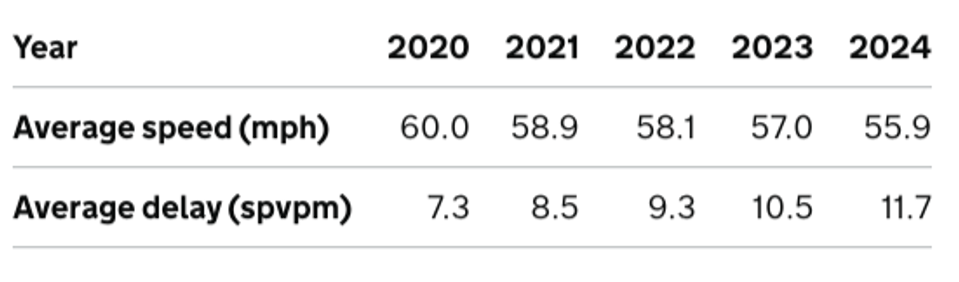
It’s a similar story in the UK, with data from the Department for Transport revealing average speeds on A roads have dropped from 60mph in 2020 to 55.9mph in 2024. And the average delay is estimated to be 11.7 seconds per vehicle per mile compared to free flowing traffic — an 60% increase since 2020.
The unfortunate truth is that our cities simply weren’t built for thousands, if not millions, of cars on their roads.
And the post-COVID rise in flexible working hours might be contributing to the rise in congestion. Commuter traffic is being spread throughout the day, turning rush hour into rush hours, according to a study published in the National Library of Medicine.
The bad news is that congestion is only going to get worse. The World Economic Forum has predicted a 36% increase in the number of delivery vehicles in the top 100 cities globally by 2030 – and estimates this will cause congestion to rise by over 21%.
“If you’re not running optimized routes, you’re already behind. Technology is the answer to that. You can’t just throw more drivers at the problem. That’s not sustainable. The solution is smarter routing, smarter tracking, and using tools that make your people more efficient.”
Rising congestion is going to hit your bottom line. Luckily, you can do something about it.
How to solve it:
- Use route optimization software that accounts for real-time traffic patterns and historical congestion data. Instead of getting stuck in predictable traffic jams, tools like Spoke Dispatch use data to spot trouble areas before your drivers hit them.
- Implement time-based delivery pricing, where customers pay premiums for peak-hour deliveries. Make rush-hour deliveries profitable by charging extra for the privilege.
- Choose customer communication tools that provide real-time delivery updates and allow rescheduling. Spoke Dispatch gives customers the power to track their delivery and reschedule on the fly when traffic throws a wrench in the original plan.
7. Challenge: demand for live visibility
Real-time parcel tracking is now a non-negotiable requirement in courier contracts.
Amazon and on-demand apps like Uber Eats have set the standard. When people order something online, they expect to be kept up to date on when it’s going to arrive.
Consumers want to plan their day around leaving the house when they know they’re not going to miss a delivery. Plus, they want peace of mind knowing where the parcel is – especially when it’s an expensive item or needed for a special occasion like a birthday or anniversary.
And clients are looking for delivery partners that can meet that demand.
How to solve it:
- Use barcode and QR code scanning to instantly update package status throughout the delivery journey. Let technology do the heavy lifting – the Spoke Dispatch app will update customers automatically as drivers scan packages, eliminating manual status updates that slow everyone down.
- Provide SMS and email notifications at key delivery stages. Keep customers in the loop with automatic alerts at the moments that matter most – out for delivery, approaching destination, and delivered.
- Offer customizable notification preferences. Some people want texts, others prefer emails. Let customers pick how they want to hear from you.
- Send proactive alerts about potential delays. Get ahead of customer frustration by warning them when delays are coming.
- Let customers respond with delivery instructions or rescheduling requests. Turn tracking notifications into conversations where customers can reply with gate codes, rescheduling requests, or special instructions.
- Offer dynamic delivery windows that adjust based on actual route progress and traffic conditions. Instead of promising “between 2-6 PM,” give customers smart windows that shrink as the driver gets closer.
- Use electronic proof of delivery. One photo with automatic timestamp and location data settles disputes before they start and gives customers instant peace of mind.
- Send immediate delivery confirmation emails with photo proof and delivery details. Hit send on delivery confirmations the moment the package is dropped off. Customers love instant proof their item arrived safely.
- Equip drivers with user-friendly mobile devices that make status updates quick and intuitive. If updating a delivery’s status takes more than a few taps, your drivers won’t do it consistently.
8. Challenge: reverse logistics growth
Reverse logistics is becoming a major headache for retailers.
58% of online shoppers want a “no questions asked” returns policy, according to Investopedia. And they don’t want to pay for it either, with 60% of UK shoppers saying they’d hesitate to buy from retailers that don’t offer free returns.
Which means providing free, convenient, and fast returns is essential for online stores that want to keep their customers.
And the problem is only getting worse. According to research by NRF and Happy Returns, return rates have more than doubled since 2019, climbing from 8.1% to 16.9%. Which means retailers are facing mounting pressure to meet customers’ demand for free returns – all while remaining profitable.
This is good news for courier companies equipped to handle this demand. Retailers are looking to outsource the time-consuming reverse delivery process to third-parties who can take care of it for them.
Plus, 27% of consumers’ preferred way to return an item they bought online would be a courier coming and collecting it from their door, according to research from Zig Zag. Which represents a great opportunity for last mile delivery companies who can bake that service into their operations.
How to solve it:
Reverse logistics can become a pain in the neck for retailers. Make it as painless as possible for them and you’ll become an integral part of their operations.
You can do that by:
- Implement doorstep return pickup services that require no packaging from customers. Make returns as easy as possible for recipients by letting them hand over an unwrapped item to your driver, who does the rest.
- Implement QR code or barcode scanning systems that instantly process returns without paperwork. This means recipients don’t have to print out return forms and fill them in – and pick-ups are as fast as possible for your drivers.
- Bundle return pickups with regular delivery routes to maximize vehicle efficiency and reduce per-return costs. Route optimization software like Spoke Dispatch will help you spot when delivery routes pass near customers with pending returns, meaning your drivers can grab without adding much extra mileage or time.
It all starts with last mile management software
These challenges are all connected.
You can’t fix high driver turnover without increasing your wages. But you can’t raise wages unless your delivery routes are tight and efficient. And you can’t tighten up routes when bad addresses and traffic eat your time.
It’s a cycle – and one that starts with making sure your drivers are following the fastest possible routes.
Luckily, we can help with that.
Find out more about how Spoke Dispatch helps you plan the most efficient routes, enhance your last mile operation, and delight recipients – and your clients.
